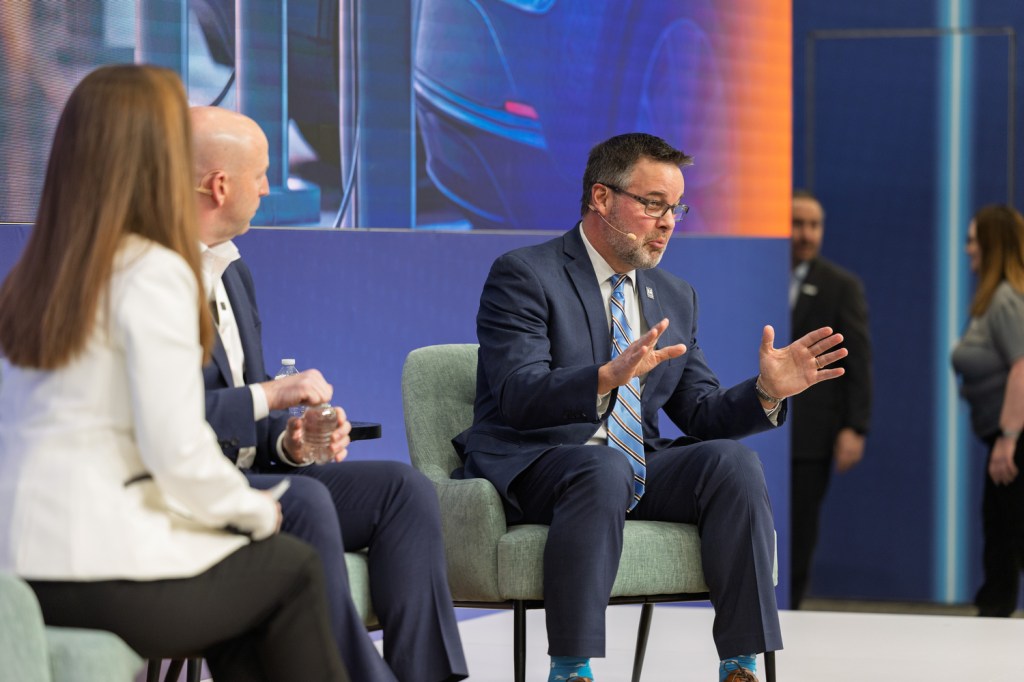
The Experience More stage in the Cox Automotive Village at NADA 2026 became the hub for automotive’s most important conversations; from the AI revolution reshaping dealership workflows and the unprecedented surge in off-lease EVs, to inventory strategy in supply-constrained markets and the modernization of remarketing. Across two days of sessions, Cox Automotive leaders and visiting industry experts delivered a clear message: the time for experimentation is over. This is the year AI moves from potential to performance.
The AI Inflection Point: From Automation to Augmentation
“You don’t really have a choice,” Marianne Johnson, EVP and Chief Product Officer at Cox Automotive, emphasized. “I think those that lean in now and start getting value are going to have sustained advantages in business in the future. If you wait, you will be one of those that are trying for decades to catch up.”
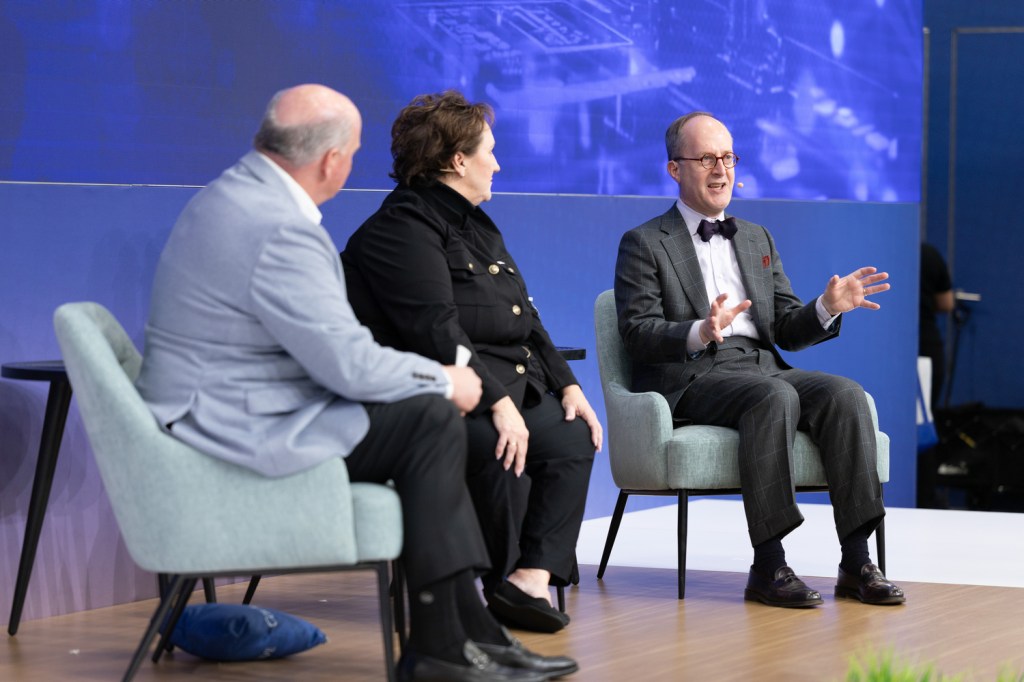
Johnson’s session with Steve Rowley, President of Cox Automotive, and David Richardson, VP of AWS AgentCore, articulated what she called a fundamental shift: dealers will soon manage both human employees and AI agents working in tandem. The key differentiator won’t be AI adoption itself; it will be the depth and quality of data powering those agents. “When you connect that data across and then you create agents, those agents can actually talk to each other and create this outcome that you could never imagine before,” Johnson explained, referencing Cox Automotive’s unique position with solutions across the entire automotive ecosystem.
Jodi Blomberg, VP of AI and Machine Learning, grounded this vision in practical reality through four dealer personas: consumer, salesperson, repair tech, and inventory manager. Her session with Ben Flusberg, Chief Data Officer, demonstrated how AI is already delivering measurable impact. “AI is not just about technology implementation,” Flusberg emphasized. “Probably even more important is thinking about the people and the change management side of artificial intelligence.”
The human element emerged as a consistent theme. As Blomberg noted, successful AI adoption requires understanding “what’s in it for them”, whether it’s fixing cars with less paperwork for technicians or closing deals faster for salespeople. As Jessica Stafford, SVP of Consumer Solutions, shared, the data supports this approach: VinSolutions customers using generative AI are converting 26% more appointments, while Deal Central’s AI-driven desking delivers 15% higher back-end profitability and 17% higher productivity.
Consumer Behavior Has Already Shifted. Are Dealers Ready?
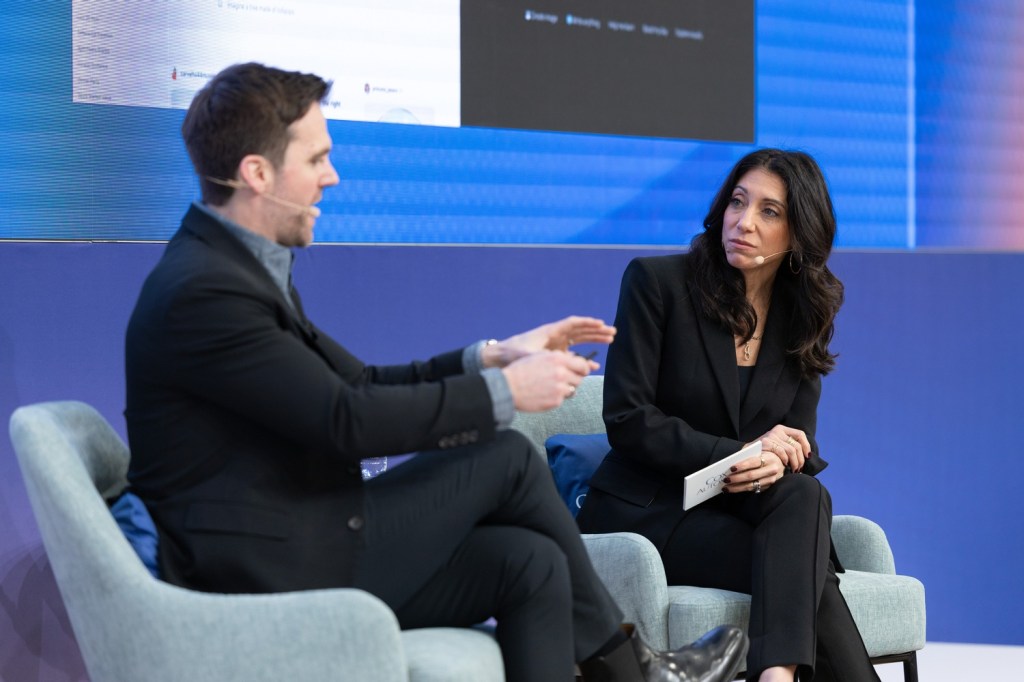
Stafford highlighted a notable gap in expectations: more than 80% of consumers anticipate using AI in a meaningful way during their next car shopping experience, while only 37% of dealers believe AI will be important to their operations. This difference points to an area where dealer readiness may not yet align with evolving consumer behavior.
The consumer shift is already measurable on Cox Automotive platforms. Autotrader’s AI mode generates 3x more leads than standard search, while the shopping assistant drives 6x more lead conversion. Even smart search, which enables natural language queries like “silver SUV under $30K with heated seats,” has increased lead rates by more than 50%.
Tessa Nadik, AVP of Product Management, and Matt Maher, Founder of M7 Innovations, delivered key insights on Generative Engine Optimization (GEO), the new frontier of visibility as consumers increasingly begin their shopping journeys in ChatGPT and other large language models rather than traditional search. “Consistency is so critical,” Maher stressed. “The inverse of that, inconsistency, absolutely will hurt your visibility.”
The Market Reality: Supply Constraints and Strategic Opportunities
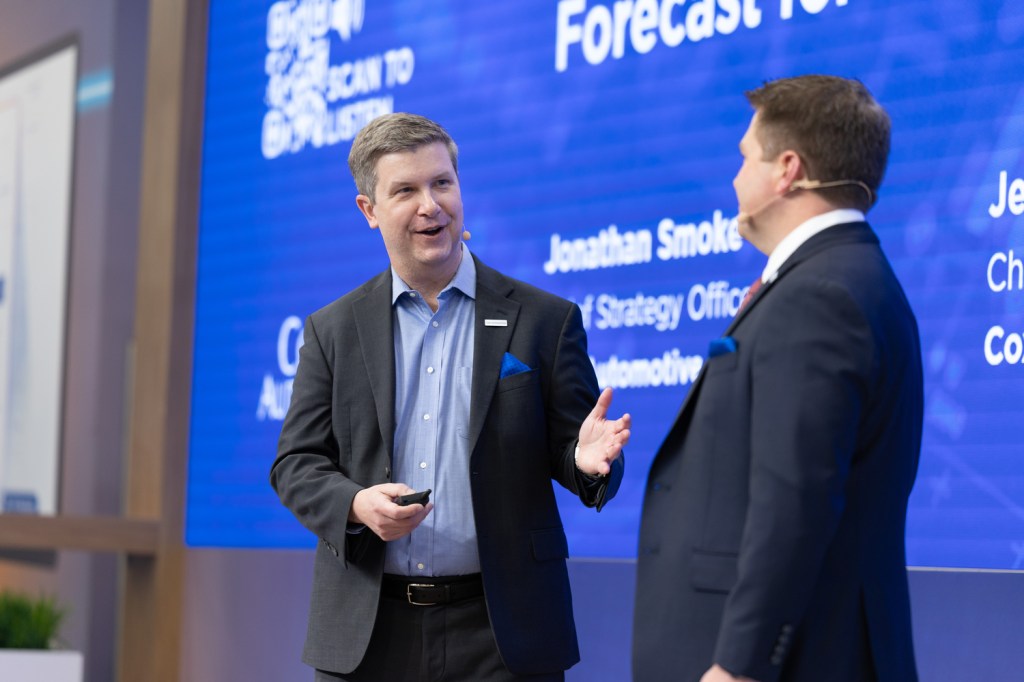
While much of the conversation centered on AI, Chief Economist Jeremy Robb (newly promoted from his interim role) and Jonathan Smoke, now EVP and Chief Strategy Officer, provided crucial market context. Despite forecast declines in some segments, they projected strong dealer profitability driven by supply constraints and robust pricing power.
The real story for spring 2026? Tax refunds averaging over $4,000, up $750 from prior years. This surge in consumer spending power intersects with what John Chaffin, SVP, Sales & Performance Management, identified as the industry’s most critical challenge: “Inventory is decision number one. Everything downstream depends on getting that right.” When refund‑driven shoppers are ready to buy, the dealers who win will be the ones with the right vehicles, at the right price points, on the lot when demand peaks.
The wholesale marketplace is undergoing its own transformation. Pete Grupposo, SVP of Sales for Manheim, NextGear Capital, and EV Battery Solutions, along with Alan Lang, SVP of Inventory Solutions, and Joe Kichler, SVP of Digital and Supply Chain, outlined how Manheim is unifying physical and digital channels to eliminate the friction dealers face. “We know we’re hard to deal with sometimes,” Grupposo acknowledged candidly. “And our goal in a lot of this is really to make it easy, frankly. We don’t want you to have a guessing game.”
The EV Reality Check: From Anxiety to Opportunity
The off-lease EV surge dominated multiple sessions, with data painting a clear picture: off-lease EV volume will jump 185%, from 106,000 to 300,000 vehicles in 2026, with EVs representing 12% of all off-lease maturities compared to just 5% in 2025.
Patrick Janes, AVP of vAuto, challenged dealers to rethink their EV strategies. His team’s analysis revealed unexpected pockets of used EV opportunity in states like Virginia, Ohio, Kentucky, and Oklahoma, markets with affordable used EVs under $25,000. “Dealers are begging to find under $25,000 ICE vehicles, right?” Janes emphasized. “A used EV has lower cost of ownership…that is a great opportunity to introduce another vehicle into the fleet.”
The session featuring Janes and Grupposo, moderated by Elena Ciccotelli, host of the EVs for Everyone podcast, addressed the elephant in the room: dealer confidence. The successful stores aren’t necessarily the ones with new EV franchises; they’re the ones investing in education, with salespeople driving EVs and understanding battery health scoring.
The Imperative for Action
Across every session, there was a consistent theme: the gap between early adopters and late movers is compounding rapidly. Maher put it bluntly: “Technology gaps rarely grow in straight lines. They compound.” Dealers who have fully adopted AI are already 50% more likely to report revenue growth, efficiency gains, and higher profitability.
2026 isn’t about debating whether AI will transform automotive retail. That debate is over. This is the year to implement, iterate, and scale—starting with one workflow, one use case, one measurable improvement. As Blomberg advised, “Think about one workflow…and start as soon as possible.”