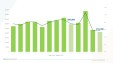
This edition of the Auto Market Weekly Summary includes updates on the Fed meeting, producer prices, vehicle affordability and the housing market.
The week brought a meaningful slate of economic releases against a backdrop of rising tension in the Middle East, which is already showing up in gas prices and consumer sentiment. Even so, Manheim data suggests the tax-refund-fueled spring bounce is continuing, with sales conversion holding strong and pricing trends pointing to firmer wholesale values ahead.
Bottom Line Up Front
The Fed held rates steady last week, but the backdrop has shifted. As conflict in the Middle East intensified through March, energy prices moved sharply higher, reintroducing inflation risk at a moment when policymakers had been hoping for a steadier path.
For consumers, the picture is mixed. Tax refunds remain strong, with the average refund now just over $3,600, up 10.8% from a year ago. That is helping support near-term spending, and wholesale used-vehicle values are reflecting that strength. The Manheim Used Vehicle Value Index was up 5.3% year over year in the first half of March, while new-vehicle affordability improved modestly in February as income growth outpaced transaction prices.
But higher fuel costs threaten to chip away at those gains. For the auto industry, the spring bounce is real and the refund tailwind remains intact for now.
The Fed Meeting
The Federal Reserve left interest rates unchanged this week, citing increased uncertainty around the U.S. economic outlook. Rising oil prices are adding to inflation concerns just as job growth has slowed, making the policy path more complicated.
- The Fed kept the federal funds target range at 3.50% to 3.75%, unchanged since December 2025.
- The Fed also raised its inflation outlook, increasing its 2026 projection from 2.4% in December to 2.7% in March.
- While some forecasters still expect rate cuts in 2026, the futures market now shows no probability of a cut this year and a growing chance of a rate increase.
Vehicle Affordability
New-vehicle affordability improved in February, as income growth and higher incentives more than offset rising prices and steady rates.
- The average auto loan rate was 18 basis points lower than a year ago.
- The average transaction price (ATP) rose 0.3% month over month and 3.4% year over year, while income increased 3.8% from a year earlier.
- The typical monthly payment was $756 in February, up 3.1% from last year but slightly lower than in January.
- The median number of income weeks needed to purchase a new vehicle fell to 35.4, pointing to a modest easing in affordability pressure.
Producer Prices and Manheim Value
Producer prices accelerated in February, signaling additional inflation pressure in the pipeline. The Producer Price Index rose 3.4% year over year and 0.7% from January.
- Goods inflation rebounded sharply, rising 1.1% after falling 0.2% in January. Food prices surged 2.4%, while energy prices jumped 2.3%. This data predates the latest escalation in the Middle East, so additional pressure may still lie ahead.
- Services prices rose 0.5%, with trade services (wholesaler and retailer margins) up 0.4%, indicating businesses continue passing higher costs downstream to consumers.
- Wholesale used-vehicle values also continued to strengthen. The Manheim Used Vehicle Value Index rose 0.5% in the first half of March and was up 5.3% from a year ago, running above the normal seasonal pace.
Builder Sentiment and Home Sales
Housing data improved modestly in the latest readings, though affordability remains a challenge.
- Builder confidence rose one point to 38 in March, while pending home sales increased in most regions.
- NAR’s Housing Affordability Index rose to 117.6, its highest level since March 2022, and the median existing-home price was up just 0.3% year over year to $398,000 in February.
- Builders continue to face pressure from affordability concerns. The share cutting prices edged up to 37%, while the average price reduction held at 6% and sales incentives slipped to 64%.
- The major builder sentiment components also improved slightly in March, though all remained below the 50 breakeven level. Current sales rose to 42, future sales increased to 49 and buyer traffic improved to 25.