
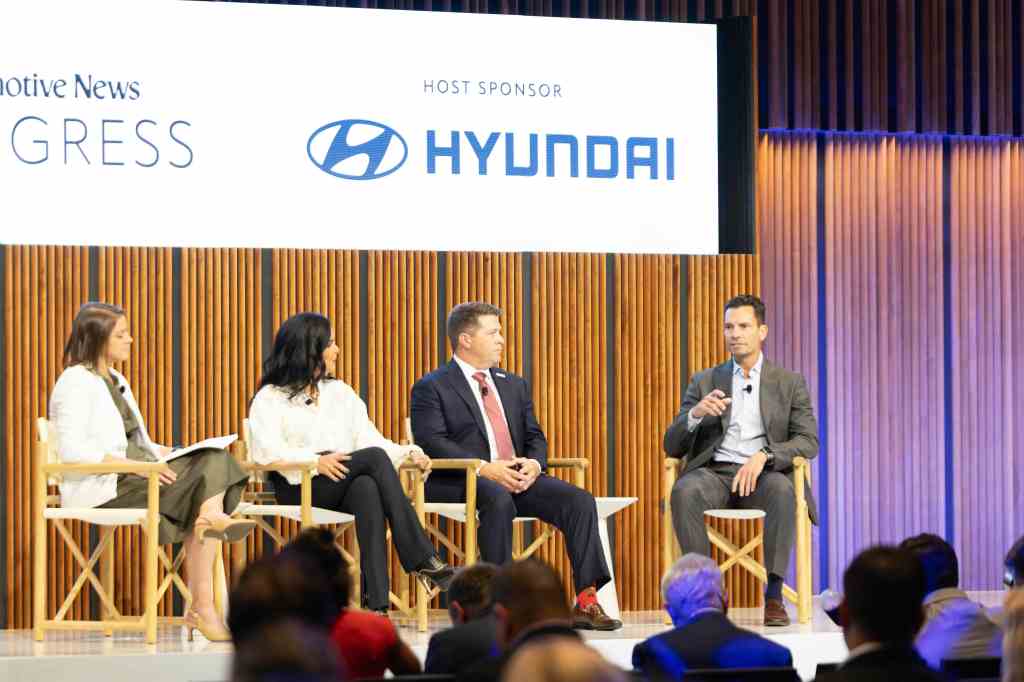
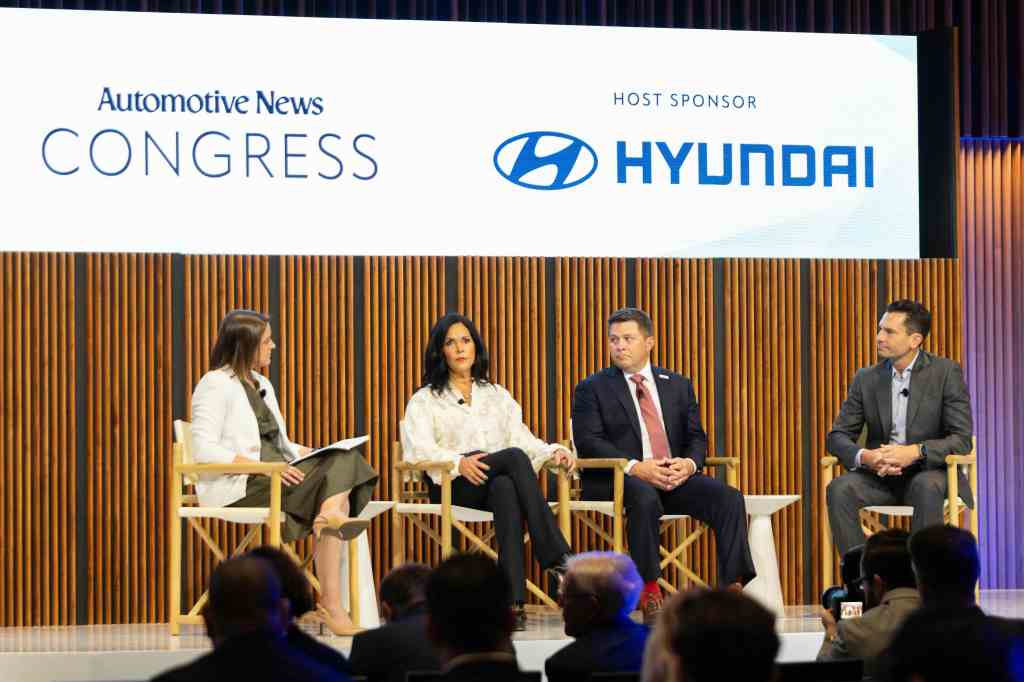
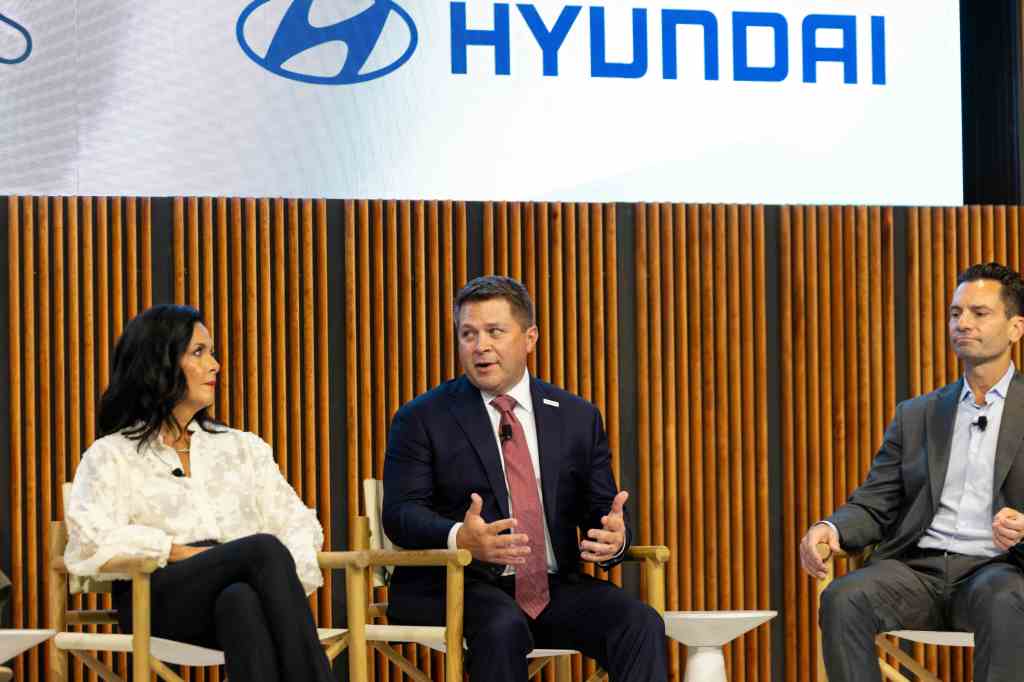
At this year’s Automotive News Congress in Detroit, in a panel moderated by Lindsay Van Hulle, Deputy Editor of Automotive News, I joined Claudia Márquez, chief operating officer of Hyundai Motor America, and Matt Weiss, vice president of analytics and pricing solutions at Mobility Global, to discuss a theme cutting across tariffs, incentives, powertrain choices and consumer behavior: Affordability is reshaping demand throughout the automotive market.

The larger story is not that vehicle demand has disappeared. It has not. Rather, pressure on household budgets is changing where demand shows up and which consumers can continue participating in different segments of the market.
Purchasing Power Is the Starting Point
Vehicle price is only part of the affordability equation. Purchasing power depends on both income and expenses.
Since the pandemic, personal incomes have risen approximately 48%, while personal expenses have risen 53%. That widening gap is increasingly shaping how consumers shop for vehicles and where demand is emerging across the automotive market.
As a result, transportation affordability can come under pressure even when vehicle prices are not rising as quickly as other costs. Housing, food, insurance, energy and other household expenses all compete for the same share of income. As consumers absorb higher expenses elsewhere, less room remains available for a vehicle purchase or payment.
The practical consequence is a market defined by tradeoffs. Some consumers are moving to a different segment or powertrain. Others are purchasing older used vehicles, extending the replacement cycle, or remaining out of the market altogether.
The Market Is Becoming More Divided
The automotive market remains relatively strong, but that strength is not evenly distributed. Higher-income households continue to support new-vehicle demand. Matt Weiss noted that households earning $250,000 or more remain strong buyers, although they have also shown meaningful migration from luxury brands into the mainstream market. These consumers may experience sticker shock, but many still have the purchasing power to complete a transaction.
The lower end of the market tells a different story. Consumers with less financial flexibility are managing higher monthly expenses, insurance costs and fuel prices while facing vehicle payments that have risen substantially from pre-pandemic levels.
Demographics are also changing the composition of the new-vehicle market. Consumers age 65 and older now account for approximately 27% of new-vehicle purchases, an increase of about seven percentage points. Wealth remains concentrated among older households, and that is increasingly reflected in the age of the average new-vehicle buyer.
This divide also makes the average transaction price an incomplete measure of consumer purchasing power. It reflects what consumers remaining in the new-vehicle market are buying, but not shoppers who have moved into older used vehicles, reduced their expectations or postponed a purchase.
Hybrids Offer a Practical Middle Ground
The growth in hybrid demand is one example of affordability changing consumer decisions.
The average new hybrid is priced approximately $5,000 below the overall new-vehicle market average. Hybrids also tend to be smaller than the largest SUVs and pickup trucks, so a growing hybrid share can place some downward pressure on the broader average transaction price.
The economics extend beyond the initial price. With fuel costs remaining an important household consideration, hybrids offer consumers improved efficiency without requiring them to make a full transition to an electric vehicle or materially change established driving habits.
Márquez noted that Hyundai’s hybrid sales had grown 58% compared with a year ago and represented 28% of its sales mix at the time of the panel. She also emphasized the importance of offering consumers flexibility across powertrains, body styles and price points without asking them to compromise on safety or quality.
That combination helps explain why hybrids are gaining ground. Consumers are not selecting a powertrain based on a single variable. They are weighing purchase price, fuel costs, functionality and familiarity together.
Used-Vehicle Demand Is Moving Older
The used market provides an even clearer view of how consumers are adapting.
The average used vehicle on a dealer lot is priced just above $27,000, according to vAuto Live Market View data. That figure was up 7% year over year at the time of the panel, about twice its normal rate of growth. If price is treated as a proxy for demand, the increase points to considerable demand for more affordable used inventory.
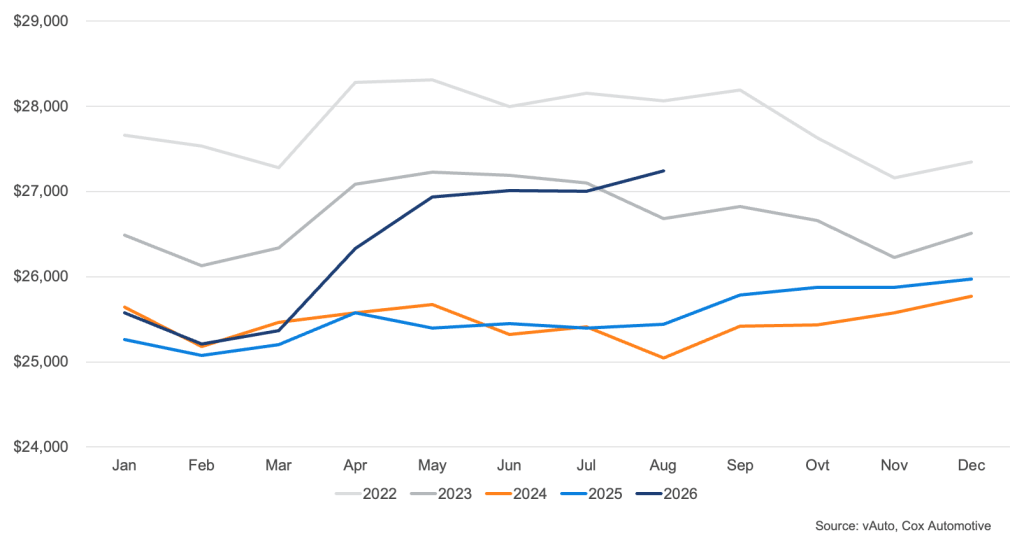
That demand extends beyond late-model vehicles. Prices for eight-, nine- and 10-year-old vehicles were up just under 10% year over year.
A 10-year-old vehicle today is a model-year 2016 vehicle. It may have fewer advanced technology features, more physical controls and more mechanical components. Consumers may also view it as less expensive to repair. Those characteristics can become more attractive when consumers are evaluating the full cost of ownership instead of concentrating solely on the monthly payment.
For dealers, this creates an opportunity to meet demand at lower price points. It also places greater importance on acquisition, inspection and reconditioning. Older inventory must still provide the reliability and value consumers expect.
There is a financing consideration as well. Extending loan terms may lower the monthly payment, but longer terms on older vehicles can introduce additional risk for lenders and consumers. Affordability at the point of sale must be balanced against the economics of the full ownership period.
The Industry Has Less Room to Absorb Costs
Consumer behavior is changing as the industry manages its own growing cost pressures.
Automakers continue to navigate tariffs, energy prices, raw material costs and supply chain volatility. Dealers are managing elevated funding expenses. The spread between invoice and transaction prices has continued to compress, indicating that the industry is approaching the limits of how much incremental cost it can absorb.
Passing those costs directly to consumers is difficult in an already constrained market. Increasing incentives can support monthly payments, but incentives cannot be considered independently. Changes in new-vehicle pricing and incentives can affect used-vehicle values, trade equity and the economics of future replacement cycles.
Policy volatility further complicates the picture. Automakers rely on long planning and manufacturing cycles. Rapid changes in tariffs or regulations can disrupt decisions about sourcing, vehicle content and production that were made years before a vehicle reaches a dealership.
The industry can adjust, but frequent changes increase the cost and complexity of doing so.
Demand Has Moved, Not Disappeared
Consumers still need transportation. The question is how they meet that need.
Consumers are adapting in different ways. Some are moving toward hybrids, others are trading down in vehicle class, and many are turning to older used vehicles or extending ownership cycles.
These decisions are changing where demand shows up, but not the underlying need for transportation.
The market also continues to work through a pandemic-era production shortfall that left millions of vehicles unbuilt. With the average vehicle age remaining near record levels, replacement demand should continue to support the industry over time.
Demand has not disappeared. It has shifted. Consumers are making different trade-offs based on their budget, whether that means choosing a hybrid, moving into an older used vehicle, trading down in segment or keeping a vehicle longer. Dealers, automakers and lenders that understand those shifts will be best positioned to meet demand as it evolves.