
What is a car worth? A century ago, the answer depended heavily on who was buying, who was selling, and how well they negotiated.
Today, shoppers can look up a vehicle’s market value in seconds, backed by extensive automotive data. That transformation began with a Los Angeles car dealer who recognized the need for a reliable pricing reference.
In 1926, Les Kelley published the first Blue Book of Motor Car Values. What began as a list of used cars he wanted to buy, along with the prices he was willing to pay, became a reference for dealers and lenders.
The idea was simple: Give people a common starting point for determining a vehicle’s value.
From Price Lists to an Industry Standard
Kelley had been buying and selling used cars since opening the Kelley Kar Company in 1918. His experience helped him recognize which vehicles commanded higher prices and how market conditions influenced their value.
Other dealers and bankers began requesting his pricing lists. The first Blue Book formalized that information into a publication that could be distributed throughout the industry.
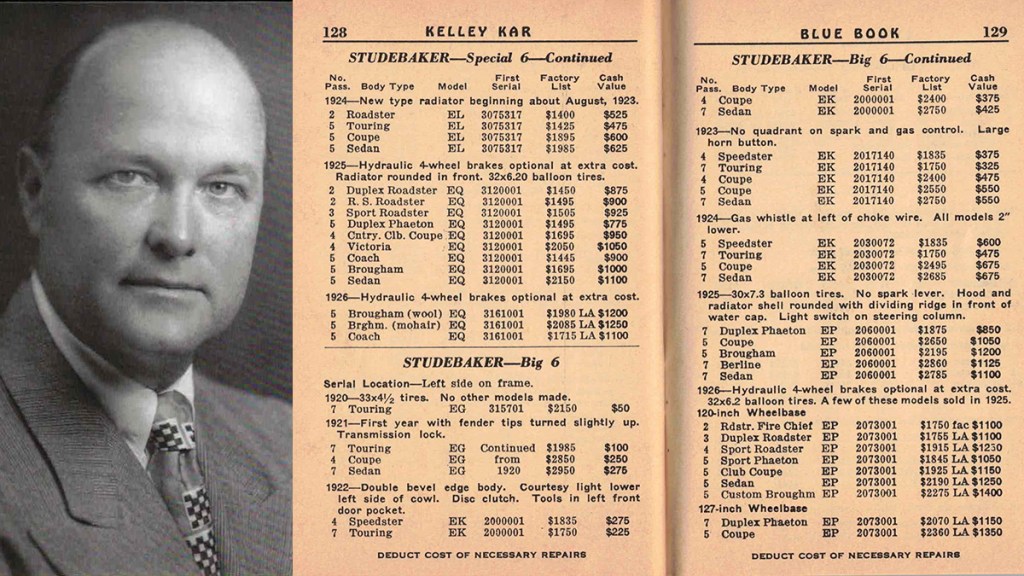
As the automobile market expanded, valuations became more sophisticated. Kelley Blue Book began accounting for differences in vehicle mileage, recognizing that two otherwise identical cars could have substantially different values depending on how far they had traveled.
In 1966, the company introduced its New Car Price Manual, expanding its coverage beyond used vehicles.
Putting Blue Book Values in Consumers’ Hands
For decades, Kelley Blue Book primarily served dealerships, lenders, insurers, and other automotive businesses.
That changed in 1993 with the publication of its first consumer edition. For the first time, ordinary car shoppers could readily consult the same pricing reference used by industry professionals.
The internet accelerated that shift. KBB.com launched in 1995, initially providing new-car pricing. Used-car values followed in 1996, giving consumers free online access to information that previously required a printed guide.
The Blue Book was no longer something shoppers needed to find on a shelf. It was a resource they could consult before visiting a dealership or negotiating a private sale.
From Printed Prices to Market Data
The biggest change in vehicle valuation hasn’t been the move from paper to screens. It’s the amount of information behind each number.
Today, Kelley Blue Book draws on extensive automotive market data to calculate values. Estimates account for a vehicle’s age, mileage, equipment, condition, and location, along with market conditions and transaction information.
Values that once appeared in periodically published books are now updated weekly to reflect changes in the marketplace.
Different transactions also call for different values. A car’s Trade-In Value reflects what a dealer might offer, while its Private Party Value estimates what it could command in a sale between individuals. The Fair Purchase Price helps shoppers understand what others are paying for vehicles.
Kelley Blue Book combines extensive market data, sophisticated analysis, and automotive expertise to continually refine its valuations and reflect changing market conditions.
A Century Later, the Same Question
Vehicles have changed enormously since 1926. Prices have risen, technology has advanced, and buyers can compare thousands of listings without leaving home.
But the underlying question remains unchanged: What’s a fair price?
The original Blue Book offered a common reference in a marketplace where information was unevenly distributed. A century later, the tools are faster, the data is more comprehensive, and the calculations are more sophisticated. Yet even the most accurate valuation is a starting point, not a guarantee of what a particular vehicle will sell for.
That’s what connects Les Kelley’s original pricing list to today’s digital valuations. For 100 years, Kelley Blue Book has helped replace guesswork with information, giving buyers and sellers a clearer understanding of what a vehicle is worth and greater confidence in the decisions they make.