The automotive industry has spent the last several years beginning the adoption of artificial intelligence. Today, the conversation is evolving. As AI capabilities mature and adoption accelerates, the industry should be increasingly focused on a new challenge: how to scale AI across the enterprise in ways that create measurable business value.
That shift was front and center during a panel discussion moderated by Cox Automotive President Steve Rowley at this year’s Automotive News Congress event. Joining him on stage were Marianne Johnson, Chief Product Officer for Cox Automotive, Oliver Parker, vice president of Global Generative AI Go-to-Market at Google Cloud, and Jeff Rachor, CEO of Berkshire Hathaway Automotive. Together, they explored what comes next as AI moves from experimentation to enterprise-wide application.
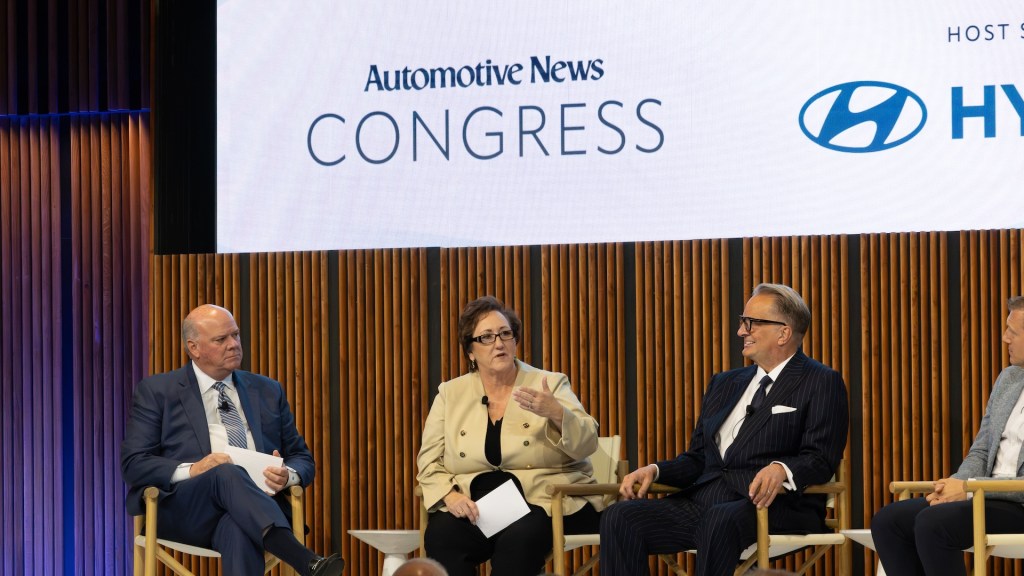
For Johnson, the pace of change is unlike anything the industry has experienced before. Organizations are no longer evaluating whether AI has a place in the business. Instead, they’re working to keep up with rapidly evolving capabilities while ensuring those capabilities create meaningful outcomes.
That speed creates enormous opportunities for innovation, but it also raises a fundamental question: What does it take to scale AI successfully?
According to Johnson, the answer starts with data.
As AI becomes increasingly capable of completing tasks and supporting decisions, connected data becomes more important than ever. AI systems require context, and organizations that can connect data across systems and workflows will be better positioned to generate value at scale.
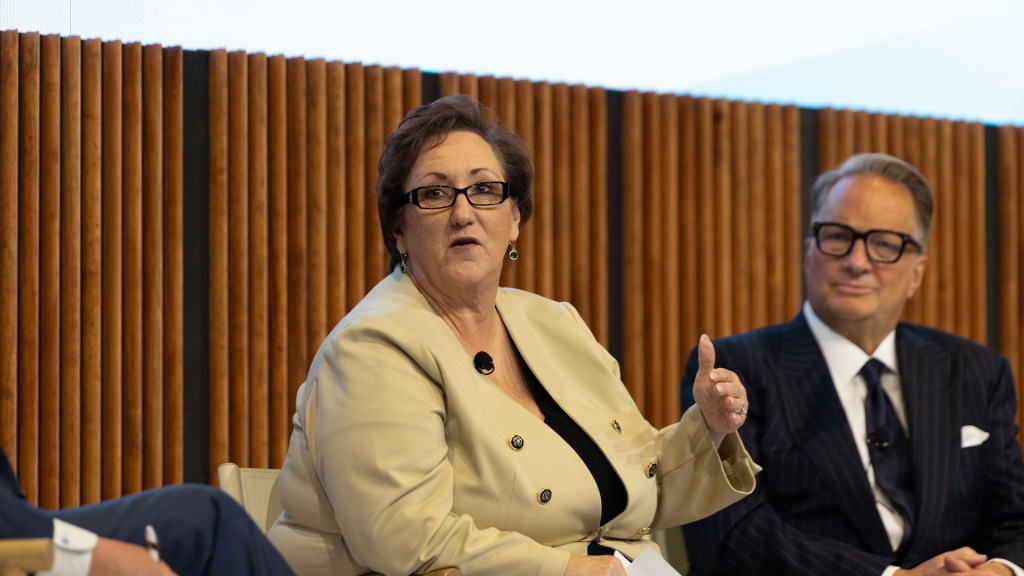
“Disconnected data just automates the wrong answer faster.” — Marianne Johnson
The emergence of agentic AI is making that challenge even more relevant. Parker described how organizations are moving beyond traditional generative AI applications into systems that can connect information, memory and action.
“Agentic AI is when the brain connects to the hands, to memory, and to thinking.” — Oliver Parker
He pointed to examples where AI agents are helping organizations automate complex processes across multiple systems, freeing employees to focus on higher-value work while improving efficiency and reducing costs. As the cost of intelligence continues to fall, those use cases are expected to become increasingly common across industries.
While the opportunities are significant, Jeff Rachor emphasized that successful deployments must remain grounded in business outcomes.
“It’s important that we don’t just have AI for AI’s sake… it’s about outcomes.” — Jeff Rachor
From Berkshire Hathaway Automotive’s perspective, scaling AI requires thoughtful governance, trusted technology partners, interoperability across existing systems and a clear understanding of return on investment. It also requires a commitment to empowering employees.
“We don’t want to eliminate employees. We want to augment their capabilities.” — Jeff Rachor
Collectively, the discussion reflected a broader shift taking place throughout automotive. The first phase of AI focused on understanding what the technology could do. The next phase is focused on scale: connecting AI to trusted data, integrating it into business processes and extending its impact across the enterprise.
For automotive leaders, that may be the industry’s next challenge. The opportunity is no longer simply adopting AI. It’s scaling it effectively.