
Summary:
- AI and large language models are reshaping dealer discovery, shifting influence from clicks to mentions and making inventory data a key factor in whether a dealership surfaces at all.
- Data quality and system connectivity determine AI impact, with the strongest results showing up when inventory, pricing, F&I, and operations work together.
- AI is changing how work gets done — removing repetitive tasks, elevating human judgment, and creating competitive gaps for dealers who wait to adopt.
Artificial intelligence is not a theoretical discussion.
The question is no longer whether AI will matter, but how will it influence discovery, data strategy, and daily decisions across the dealership. The challenge often isn’t separating hype from reality. It’s understanding where AI is already delivering results, where the risks are real, and how quickly competitive gaps are forming.
To bring clarity, let’s explore five practical questions dealers are asking right now, and what it means for dealership leaders.
1. Will People Buy a Car through LLMs like ChatGPT?
Large language models are becoming a discovery gate, not just a search tool.
In the mid-2000s, search engines determined which websites got clicked. Today, large language models (LLMs) increasingly determine which businesses get mentioned at all.
Consumers are already using generative AI tools to research and purchase everyday products. That behavior is expanding, not contracting. In fact, many shoppers now prefer using generative AI over traditional search, and AI assistants are becoming another channel in an increasingly omnichannel buying journey. This shift makes inventory rich, well-structured dealer websites more important than ever, especially as conversational search becomes more common and AI tools increasingly rely on trusted automotive data sources like Kelley Blue Book to inform recommendations.
As this shift accelerates, success in AI-driven discovery depends less on marketing creativity and more on data quality:
- LLMs rely on actual inventory data, not promotional language
- Generic or thin inventory information may result in no visibility at all
- Dealers with VIN-level enrichment and merchandising notes are significantly more likely to surface in conversational search results
- Inventory data is becoming a strategic asset, not a back-office function
In short, AI systems reward precision. You can’t fake it with LLMs, and that’s why data quality matters more than ever.

2. Is AI Actually Putting More Gross on the Books?
Profitable AI adoption is about orchestration, not a single feature.
AI gains in dealership operations rarely come from one magic tool. The gains compound when pricing, follow-up, and personalization work together across systems — including AI-enabled shopper experiences across marketplaces like Autotrader.
When AI tools are fully adopted and optimized at the dealership, there are consistently stronger outcomes:
- Revenue growth
- Operational efficiency gains
- Higher overall profitability
If you’re only experimenting or dabbling with isolated AI use cases, you’re less likely to get the same results.
Where the strongest financial results appear for those who have fully adopted:
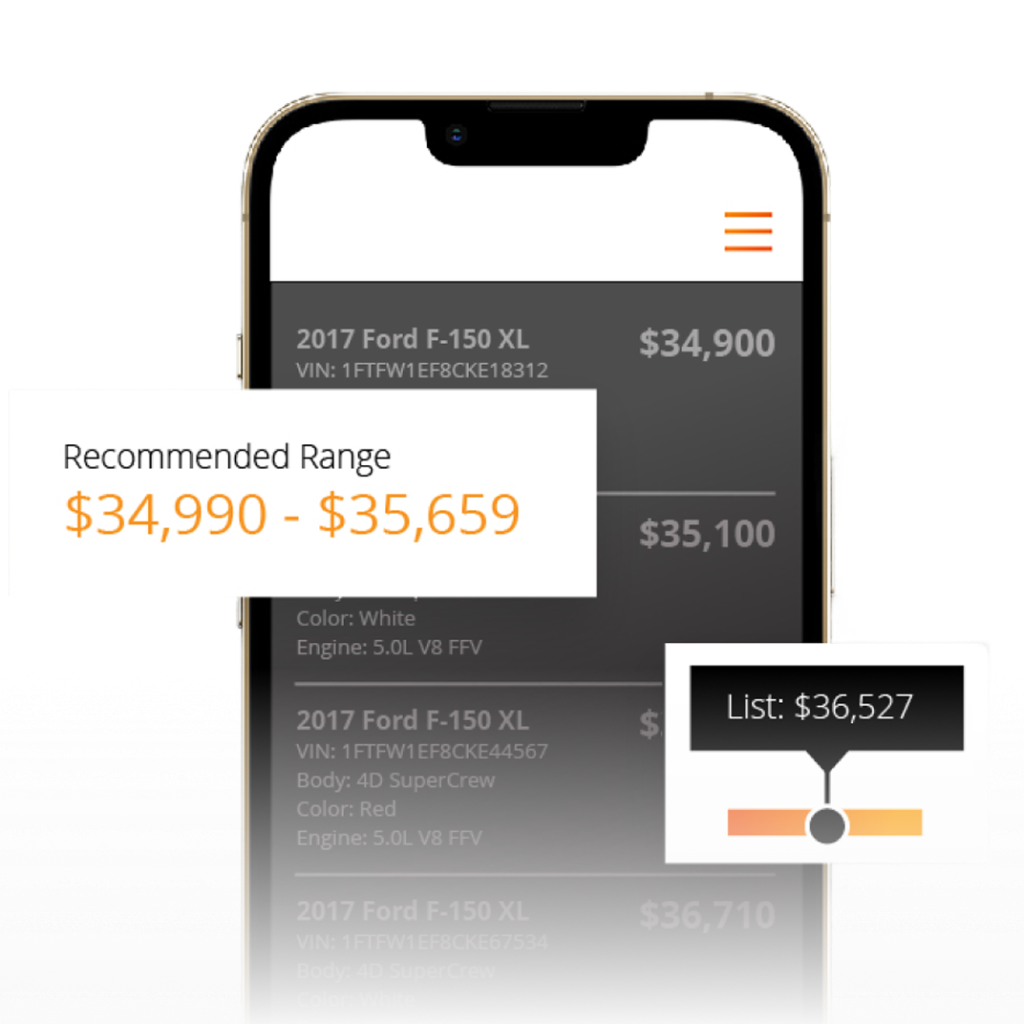
- Inventory-level pricing consistently outperforms surface-level
- Dealers using VIN-specific pricing recommendations are significantly more likely to improve margins
- AI-enabled F&I tools contribute to higher close rates and stronger backend profitability by reducing friction, errors, and manual steps
The key takeaway: AI tools produce results when they are connected and embedded into decision-making, but not when they’re operated in silos.\
3. Does AI Replace People Working in the Dealership?
AI replaces repetitive work. Not human judgment.
Every major technology shift brings concern of job replacement. History suggests something different. From ATMs to spreadsheets to industrial automation, technology repeatedly removes routine work while increasing demand for human judgment, expertise, and customer-facing skills.1
AI excels at repetitive, rules-based tasks: follow-up, data analysis, administrative work, and pattern recognition. When those tasks move to machines, humans move up the value chain.
In dealership environments:
- Top performers paired with AI consistently outperform top performers without AI
- Manual work that contributes to burnout and turnover is removed by AI
- Implementation is often easier than expected when leadership sets clear expectations and support
In practice, this enables:
- AI-supported sales and BDC teams that handle more appointments without sacrificing personalization
- F&I professionals to focus on high-value customer interactions instead of process friction — the same applies in service operations, where AI helps teams spend more time with customers and less time on administration
- Marketing teams to automate intelligence while retaining human oversight

4. What’s the First Move? And What’s the Big Swing?
The hardest part of AI is not the model. It’s the foundation.
Many organizations overestimate the ease of advanced AI and underestimate the work required to get started.
AI adoption typically follows a phased roadmap:
Phase 1: Foundation
- Data cleanup
- System connectivity
- Clear ownership and goals
- 60–90 days of groundwork
Phase 2: Optimization
- Pricing intelligence
- Personalized outreach
- Smarter follow-up workflows
Phase 3: End-to-end Integration
- Pricing, CRM, marketing, and F&I systems working together
- AI embedded in daily operations
Dealers with a clear plan see stronger performance and efficiency gains. The plan matters as much as the tool.
The most effective start focused, solving one real problem, measuring outcomes, and expanding from there.

5. What Happens If You Wait 18 Months to Incorporate AI?
The competitive gap compounds faster than most leaders expect.
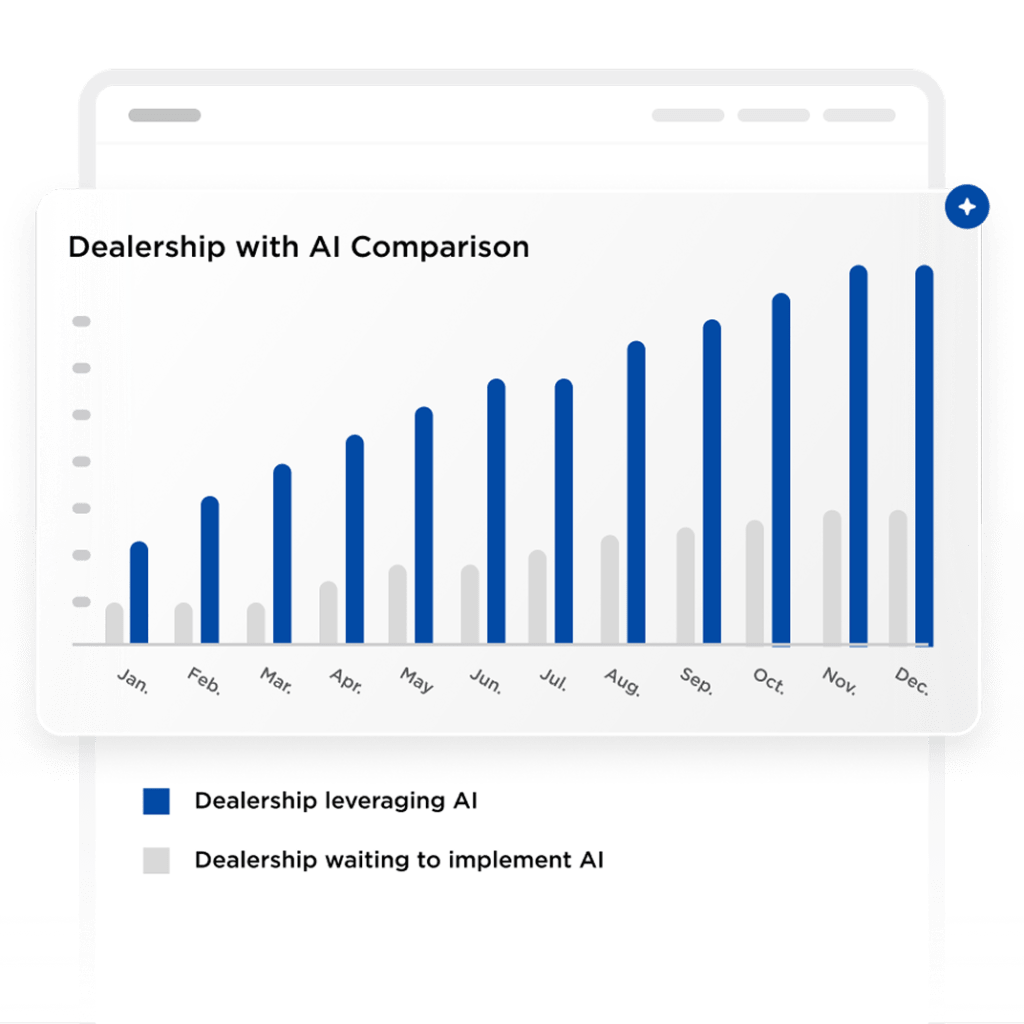
Technology gaps rarely grow in straight lines. They compound.
Today:
- A small percentage of dealers have fully AI-integrated workflows
- Many are still experimenting or actively waiting
The implication is significant. Early adopters are training their systems with months or years-more real data. That advantage doesn’t reset.
We’re seeing that waiting is not a neutral decision. Each month of delay widens the gap between:
- Dealers learning from live data today
- Dealers trying to catch up later with less insight
Most optimal AI users agree the benefits outweigh the risks, and that investing now is critical for long-term competitiveness.
What Dealers Can Do Next
AI is already reshaping dealership operations. The real question for many dealers is whether it becomes a tax or a source of leverage.
For leaders looking to act without overengineering, the path forward is clear:
- Start with discovery in mind: Large language models increasingly influence which dealers are mentioned before shoppers ever click.
- Treat data as a strategic asset: Inventory quality and system connectivity now determine AI visibility, performance, and ROI.
- Focus on decisions, not tools: AI delivers the most value when embedded into daily workflows that help people work faster and smarter.
- Plan for foundation first: Data cleanup and system integration across core operational systems determine speed to value.
- Move deliberately, not perfectly: Start with one AI enabled workflow, support teams through the first 60 days, measure results, and expand from there.
Waiting is not a neutral decision. Competitive gaps tend to compound over time.
Understanding how AI reshapes discovery, data, and decisions is only the first step. The next is applying those insights in ways that fit your dealership, your systems, and your people.
Cox Automotive is supporting dealers at every stage of AI adoption.
¹ Historical examples frequently cited include the introduction of ATMs and the evolution of bank teller roles; the adoption of spreadsheet and automation tools in accounting; and long-term research on industrial automation and skill upgrading.
Sources include MIT economist David Autor’s research on task automation and job composition, U.S. Bureau of Labor Statistics analyses of occupational shifts, and peer reviewed studies on automation and employment structure.