Fewer franchised and independent dealers are concerned about tariffs than they were in March 2025. However, concerns about parts, reconditioning and service operations have increased.
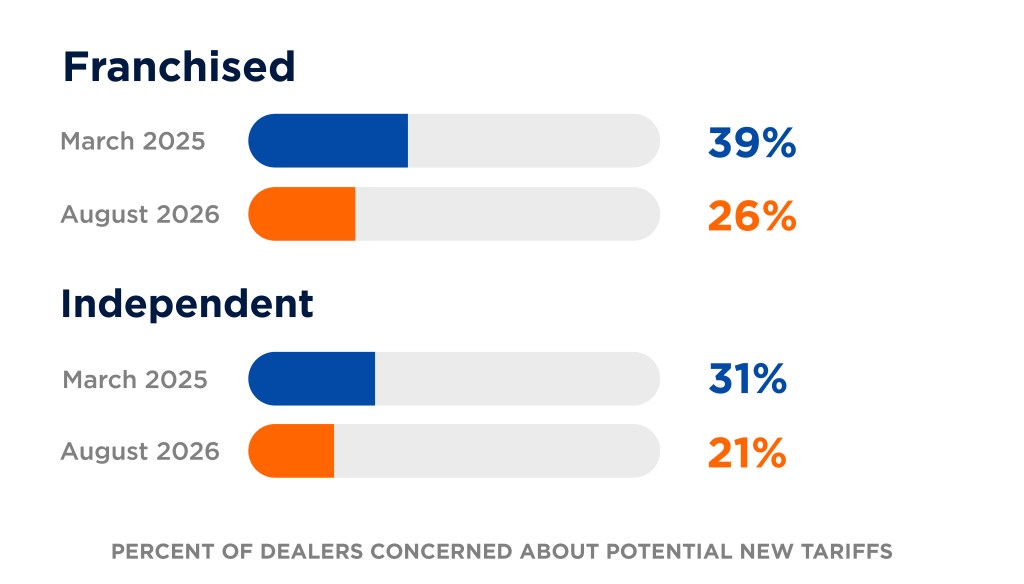
Dealer concern about tariffs has eased since Cox Automotive’s March 2025 survey, according to polling conducted in August 2026. Even as tariff discussions return to the headlines amid U.S.-Canada trade negotiations, the share of both franchised and independent dealers who said they were concerned fell.
The findings indicate that tariff headlines are creating less alarm among dealers. That does not mean dealers view tariffs as risk-free.
More Dealers Report Little to No Concern
The most notable shift wasn’t just a decline in dealer concern about tariffs. It was a significant increase in the share of dealers reporting little or no concern.
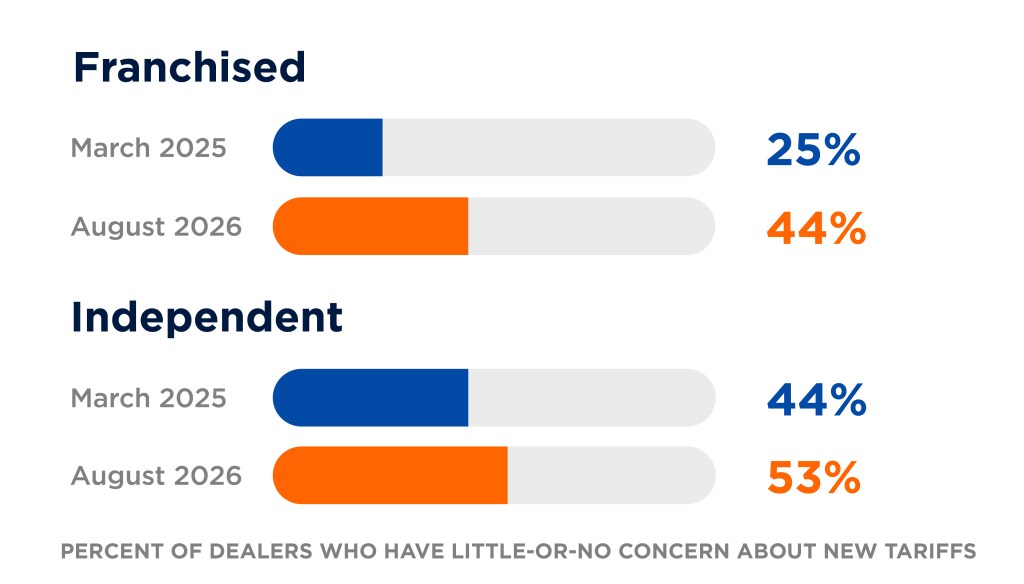
Franchised dealers have shown a larger decline in tariff-related concerns. This may reflect their greater initial concern about potential impacts on new-vehicle sales and the perception that tariffs have had less impact than originally expected.
More Dealers Expect a Negotiated Outcome
A growing share of dealers said they expect an agreement that would reduce the effects of tariffs. Among franchised dealers, the share tripled in August 2026 from March 2025. Among independent dealers, the share doubled.
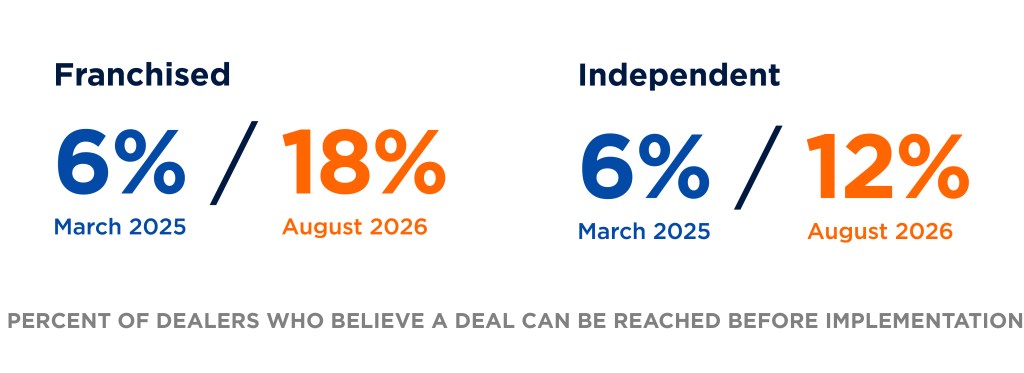
Generally, dealers appear increasingly likely to view tariff announcements as part of an ongoing negotiation process rather than an immediate business threat, which may help explain the decline in reported concern levels.
Parts and Service Remain a Concern
Concerns about parts, vehicle reconditioning and dealership service operations increased among both dealer groups.
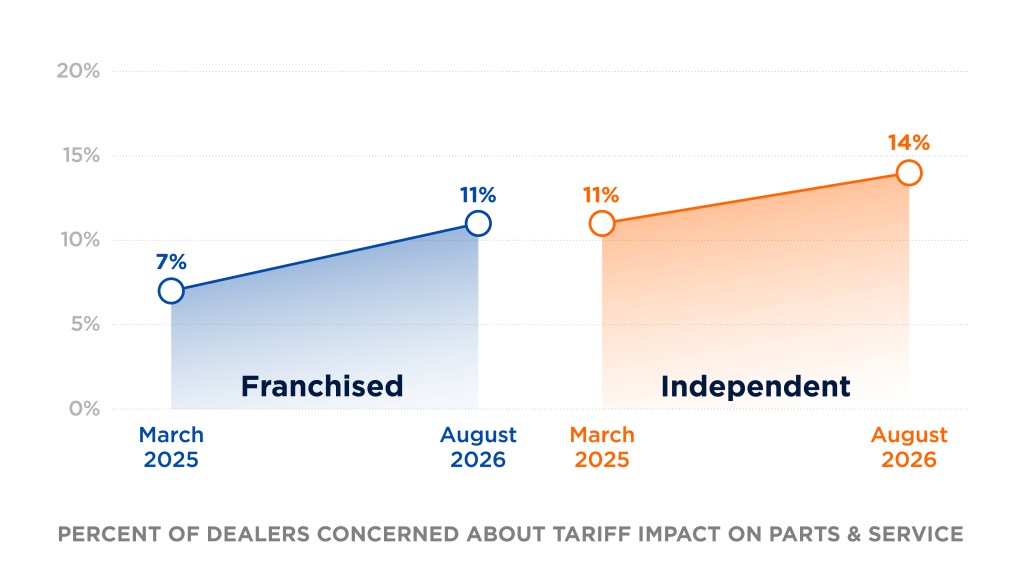
Although overall tariff concerns have moderated, dealers continue to identify fixed operations as a potential area of exposure. Higher costs for imported parts and components could put pressure on reconditioning expenses, service operations and dealership margins.
Bottom Line
Dealers are far less concerned about tariffs than they were in the early months of the Trump administration, when the border taxes were first introduced. The findings suggest many dealers have grown more comfortable with the evolving trade environment and increasingly expect a negotiated outcome. However, potential cost pressures tied to parts, reconditioning and service operations remain an area of focus.