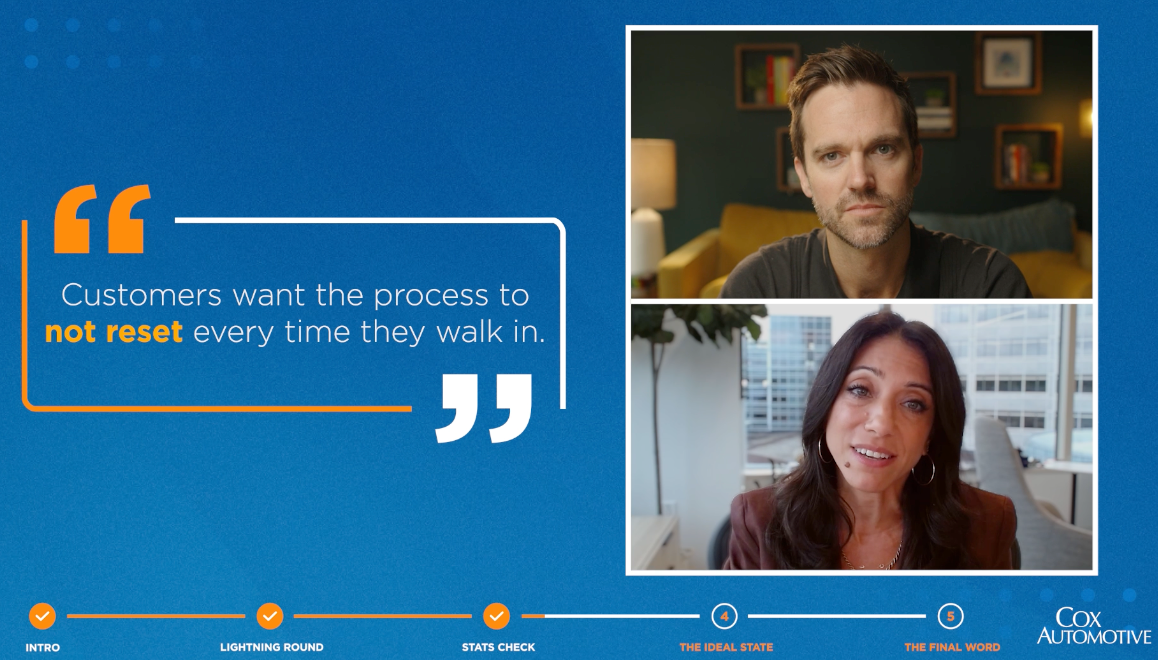
AI is changing the way people shop for vehicles. What does that mean for your dealership? In this episode of Driving Impact, Matt Maher sits down with Cox Automotive’s Noah Lee to explore how AI is reshaping the customer journey and what dealers can do to stay ahead. Noah shares practical insights on what today’s AI-informed shoppers expect, why transparency and faster response times matter more than ever, and how dealers can use AI to create better customer experiences while keeping people at the center of the process. Discover real-world ideas to help your dealership adapt, compete and grow in an AI-driven market.
Episode Transcript
Introduction
NOAH: If you’ve got a customer who’s been using AI and they come to you, they’ve been primed to buy from you and actually are probably more prepared for the buying process. The gap between the dealers who’ve leaned in and the ones who are waiting is actually compounding. AI keeps getting smarter. It’s being integrated into more systems. Now, here’s the thing, though I can’t fix broken processes, I can only break broken processes even faster.
MATT: Hello and welcome to Driving Impact. I’m your host, Matt Maher, and our guest today, the Automator of Automotive. The Carburetor of Content, the Igniter of Innovation, I just made this up a few minutes ago and I regret only one of them, it’s Noah Lee. Welcome to the show, Noah.
NOAH: Thanks, Matt. Appreciate it. Glad to be here.
MATT: What’s been going on since I last seen you?
NOAH: Been great, you know, just busy traveling all over the country, speaking at different events, talking to dealers everywhere, and, really just trying to spread the, the gospel of innovation and technology. On the Cox automotive side, the big thing is our acquisition of Fullpath, which is a huge innovator in the AI space and one-on-one marketing. And it’s really going to be some next level stuff.
MATT: Now, before we get into our full episode, we’re going to start with a lightning round. Are you ready?
NOAH: I was born ready.
LIGHTNING ROUND
MATT: First question. One tool you’d give every dealer tomorrow.
NOAH: Predictive insights.
MATT: The dealer hire most under-recruited right now.
NOAH: I don’t think anybody’s hiring this, but a process engineer.
MATT: Is the BDC Business Development Center dead?
NOAH: No, it’s really just going to be slimmed down and be way more efficient with AI powering it.
MATT: One channel dealers are still overspending on in 2026.
NOAH: Broadcast television. Yep.
MATT: The metric every GM should look at every Monday morning.
NOAH: You want to be looking at your close-rate by lead-source, so you can know where to put your money.
MATT: One thing dealers still do that the data says they should stop.
NOAH: This is an easy one. Withholding pricing or payments until that customer comes into the dealership. It’s old school, doesn’t really work, and they’re going to shop somewhere else.
MATT: I want to unpack that, but we don’t have time. The part of the car buying journey where AI hits hardest.
NOAH: Okay, it’s going to be lead response and speed to engagement. If we can answer an inbound request under five minutes, the likelihood of that turning into an actual sales conversation increases by 60, 70% or more.
MATT: Love it. Noah, congratulations. You survived the lightning round.
STATS CHECK
MATT: Okay, I want to start this conversation with stats because there are people who talk the talk in AI and those who walk the walk, and you very much walk the walk. And these are three statistics that I want to bring out that come from Cox. And I want to understand if this is what dealers should be paying attention to, or is the headline or the numbers behind the stats, not telling the real story. So if you’re ready, I’m going to hit you with our first stat: “19% of car buyers used AI tools in their shopping process last year. Among those who did, 84% reported the highest satisfaction scores of any buyer group.” [Source: Cox Automotive Car Buyer Journey Study, January 2026]
NOAH: So here’s what that really kind of points to. The people who are using AI are going to be your best customers. And it’s actually kind of unique because you think, okay, I’m going up against the T-1000, right? This person is using this incredible technology to negotiate against me as a dealership. But what we actually find is the majority of people using AI in the car buying process are using it to research what vehicle’s right for them, what their payment should be, and also figuring out what dealership they should work with.
So if you’ve got a customer who’s been using AI and they come to you, they’ve actually been primed to buy from you and actually are probably more prepared for the buying process. The other thing, too, is because they trust that AI so much, they’re already primed to trust you, because that AI has recommended you as a dealership to work with.
So you’ve done a good job on the back end of, you know, maximizing or optimizing your SEO. But the more important thing is you’ve got a good reputation online, because these tools are looking at your Google reviews, they’re looking at your Yelp reviews, your dealer rater reviews. And if you’re doing a good job there, that’s going to make you win in the visibility for these AI tools and prime that customer to trust you and be ready for a better experience. So honestly, AI is our friend on both sides of the transaction.
MATT: So the myth there that I think you just busted in my mind is that ambiguity, or not having enough information, you think would be a feature. Say, okay, I am the dealer, I have all the information, but then, there potentially could be less trust there, because then it’s just you as the dealer trying to make this person trust you. What you’re saying is because they trust the AI, it actually increases the trust of the dealer. So you’re intellectually meeting the buyer where they are. Is that how you see it?
NOAH: Yeah, 100%. And the thing is, it’s not just people using Claude or ChatGPT to research dealerships. What we’re seeing are these companies that are springing up that are virtual shopping dealerships using AI agents, and then creating scores for those dealerships on their transparency, on their responsiveness, etc. Then providing resources for shoppers on, okay, these are the best dealerships to work with, because right now there’s still that trend of somebody calling into a dealership asking for an out the door price and the dealer saying, “hey, we don’t do that, you got to come in.” And that’s not a great experience for the shopper.
So we’re seeing companies catalog those dealerships and saying, “hey, you know what? Don’t work with these guys. Work with these guys.” And guess what? These LLMs, they’re looking at those research sites as well, and they’re going to start recommending those dealerships versus those that are not providing the transparent pricing out there.
MATT: That’s so interesting because basically the AI is the qualifier like if you’re walking into the dealership, you’ve been qualified already. So as a dealer, you hope they actually did AI research when they walked in.
NOAH: 100%.
MATT: So that moves us to the second stat. “Dealers who have fully adopted AI are 50% more likely to report revenue growth, efficiency gains and higher profitability.” [Source: NADA 2026 Cox Automotive recap, February 2026]
NOAH: So that number it’s going to keep growing. And the gap between the dealers who’ve leaned in and the ones who are waiting is actually compounding because AI keeps getting smarter, it’s getting better. And it’s being integrated into more systems.
Now here’s the thing though. AI can’t fix broken processes. It can only break broken processes even faster. So before you say, “hey, we’re going to just buy a bunch of AI tools and just throw them on to our dealership and hope for the best” you really got to take a step back.
Remember I was talking about process engineers? Being the most underutilized or under-hired role at a dealership? I don’t think anybody actually has this, except for maybe Longo Toyota. Actually look at your processes, like how do you handle inbound digital retailing leads? How do you handle it when somebody comes into the store? Are you sending out numbers on a regular basis? How are you doing that? How are you transferring somebody from service to sales or vice versa? You really got to make sure that those are dialed in and have really solid processes. And if you do that, layer AI on top of it, nobody’s going to catch you. You’re dialed in, you’re crushing it.
MATT: I love that you said that. And it leads me into the third stat I want your reaction on: “83% of consumers say I will reshape car buying within ten years, yet only 63% of dealers agree it’s critical to invest now.” [Source: Cox Automotive Car Buyer Journey Study, January 2026]. What’s your reaction on that?
NOAH: In the automotive industry as a whole, most dealerships are pretty hesitant to adopt new technology, but the ones who are catching up and being hesitant are actually the ones who are going to feel it the most.
So the way that I kind of think about this is back in the day when we were talking about paid search versus broadcast advertising, we were saying, “hey, you know what? Go to where people are actually looking for you instead of just spraying and praying and you’re going to do really well.” What we saw was dealerships who jumped in and adopted paid search. That was it. They weren’t even doing display [ads]. All of a sudden, they’re taken over in their market.
So if you’re a forward thinking dealership, you want to kind of shake things up. Look at your processes, use AI to enhance them, and all of a sudden you’re going to be doing really great.
AI APPLIED
MATT: These numbers tell me that the customer has changed. So what do you think it actually looks like today when an AI informed customer walks through that door?
NOAH: Well, that customer, you know, they’ve done way more research prior to showing up for the most part, right? So they figured out what vehicle’s best for their lifestyle.
[For instance,] I’ve got two kids. We travel all over New England. We need something big and fuel efficient. Right? AI’s going to find that that vehicle for you and guide you to that particular vehicle. But it’s also going to help you compare prices and even maybe help you negotiate before you ever talk to a salesperson.
So now on the dealership side, though, what’s great is wherever they’re researching a vehicle or looking at inventory or figuring out what their trade in is worth, we’re getting those data points. And when that person reaches out to you, you’ve got a full customer profile on them. You know how likely they are to buy a vehicle. You know exactly what vehicle they’re interested [in]. And you know what their price range is. You know what other vehicles they’ve looked at. You know what their trade-in is going to be. You even know what payments they’ve explored inside of the digital retailing tool.
So not only is that customer far better prepared for the dealership experience, but your salespeople, your sales managers, your finance managers are much better prepared to provide a great experience for that shopper.
MATT: Information used to be an advantage. You are selling me on the fact that an AI empowered customer is actually so much better—it qualifies a dealership, I totally get that and I buy into that—but that information advantage is somewhat gone. So does that change what a good salesperson looks like?
NOAH: Yeah, definitely. It’s all about being transparent. You can’t really get away with the old bait and switch tactics. AI can easily see through any non-transparent information that that salesperson is putting out there. If they’re sending out a deal sheet and you’ve got a bunch of add ons—mandatory this, that or the other thing, or $200 for nitrogen filling your tires—AI is going to call that out and say, “hey, you know what? Nitrogen actually costs about $0.50 to fill up those tires. These guys are charging you 200 bucks and it doesn’t add any value to it.”
MATT: It sounds like with dealers they have to be more prepared…because you have this super intelligent consumer. When it comes to the prep that a dealer needs to do, how does that work?
NOAH: So that’s the thing. When that lead comes in, because most of the time, honestly, what we see is people just calling into the dealership. Web forms—they’re great, but you don’t actually get a whole lot of them in comparison to inbound phone calls. Once you have that person inside of your CRM, we can start making those connections and show that salesperson, “hey, this is what this person’s interested in. This is their profile.” So really we need to be training salespeople and dealership staff to look up that customer, look at the details of them, and then prepare for when that person’s coming in [with].
MATT: So then the question then becomes, what are the best benefits of some of these tools to build this profile in real time, so that when that person walks in, you’re meeting them more than halfway?
NOAH: A couple of different things. The first thing that I think of when we’re talking about AI and what it’s good at is digesting huge volumes of data. Reading through stuff that would take you or me a thousand years to get through and we’d never comprehend it because there’s just too much. And then turning that into information that you can utilize as a human being. So the first thing was those predictive insights, that customer profile.
The other thing that AI and computers in general are really good at is automating things. So doing repetitive tasks that a human gets bored with or can mess up because you’re just doing it over and over again and then all of a sudden you fat finger something in your keyboard and things are messed up.
Now with LLM’s, what we’re seeing is digesting that huge data, getting a good understanding of that shopper, and then also being able to do those repetitive tasks, but in a personalized way.
So a really good example of that is like a virtual assistant. So inside of Vin Solution we have what we call our Virtual Contact Assistant. So it’s taking everything we know about that shopper across their entire experience across all of Cox Automotive, billions of data points, getting that profile on them, and then when that shopper reaches out to the dealership, maybe sends in a lead or calls in or whatever, that virtual contact assistant can engage with them via text message or even email and, you know, bring them into the dealership, maybe schedule an appointment, get their trade-in information, answer questions about the vehicle, what the features are, etc., and really kind of take that mental load off of salespeople.
Because at the end of the day, people are really good at being people, and doing the people kind of stuff, like having a nice conversation, selling the value of the dealership, building a relationship with that customer.
MATT: So to me, Vin Solutions’ virtual assistant is just that by definition: it is an assistant. It’s handling the logistical pieces of things. It’s not a replacement at all. It sounds like it is helping with logistical pieces, especially in after hours. But it if anything, it is kind of curating that relationship, so that when the person meets the person, the dealer meets the customer, it’s the highest and best.
Is that fair to say it’s not a replacement, it’s just an assistant that just makes the human better?
NOAH: Yeah, 100%. And the thing is too, is it can reengage with customers down the road. So maybe a salesperson marks a lead as lost because the person says, “I’m actually not interested in buying a car right now.” But then maybe a month later, they start poking around AutoTrader, or they’re going to your Dealer.com website or they go to KBB again and we see, oh, this person’s doing some more research.
That virtual assistant is going to see that and reach out to them and say, “hey, you know, we talked three months ago about this F-150 or this Camry or whatever. We’ve got some really great deals and, you know, we’re paying top dollar for trade-ins. We’d love to start that conversation with you.”
The other thing is we recently acquired Fullpath, so it’s taking that to the next level. It’s digesting all that Cox Automotive data and then actively prospecting shoppers who haven’t even reached out to you. So they’re in your CRM or they’re in your DMS and they start doing research a couple of years after they reached out to you or bought a car from you, and now it’s going to start sending marketing messages to them across text message, email, even paid search, display, remarketing and get them reengaged. Maybe you get that lead, and then your virtual contact assistant can start reaching out to that person.
MATT: So as we wrap up this section, what I’m hearing here, if you’re a dealer that’s a skeptic, you say, “Oh, okay, so you have a chat bot that can answer things.” But what I’m hearing, thanks to the Fullpath acquisition, thanks to what Vin Solutions does, is this quasi-assistant / employee that’s trained on a knowledge base that’s just really helpful. It’s almost pushing a customer down the marketing funnel path to get them in. Or someone’s watching Saturday Night Live and an OEM puts out a great commercial and you know, it’s 11:30 at night. No one’s going to be at the dealership. But for the customer, it’s 24/7. They can speak to this assistant and kind of still go down that funnel, be handed off to a human. So it’s almost, I like what you said about this. It’s allowing the dealership, the salespeople, to do their highest and best. And I think that is the best part of these tools.
NOAH: 100%. I mean, you’ve got to think about all the leads and inbound requests that you’re getting after hours and how many of them [for which] it’s eight, nine, ten, 12 hours before they actually get a response. When you’ve got that virtual contact assistant, boom. You’re getting that response within five minutes. And that drives up the engagement rate and the likelihood to close dramatically.
THE FINAL WORD
MATT: Closing this episode, I want to give you the Final Word. So let’s address something that dealers have heard a lot about. I would love your 60 second TLDRon why it matters to dealers. The final word is “attribution.”
NOAH: Okay, so attribution is incredibly important because you want to figure out where your spend is going and what kind of return on your investment you’re getting from that. So a really easy way of looking at that is your close rates on your lead sources, and that’s going to give you insight into how much money you’re making on your investments. But the other thing too is we want to get people to use more technology when they’re interacting with your dealership, because when they use your technology, you’re able to capture their data and provide a better experience for them.
MATT: It has been an absolute pleasure. Thank you for joining us. I mean, some call you the Mr. Beast of Automotive. At least I call you that.
NOAH: I think you’re the one person, I get dozens of views.
MATT: I think it is amazing, I love the content that you create. Please keep doing that and do more of it.
NOAH: Sounds great.
MATT: Thank you for joining us on Driving Impact. Excited to see you again in Atlanta sometime soon.
NOAH: Love it.
MATT: That’s all for this week of Driving Impact. We’ll see you in a few weeks.