How did one dealership grow from 35 vehicle sales a month to 998? In this episode of Driving Impact, Noah Lee shares practical lessons on AI, inventory management, transparent pricing and connected retailing. Learn how dealerships can use data, technology and streamlined processes to improve the customer experience, reduce friction and drive stronger sales performance. Whether you’re focused on dealership operations, automotive retail trends or AI for dealerships, this conversation offers actionable insights you can put to work.
Episode Transcript
INTRODUCTION
NOAH: There wasn’t a magic bullet that suddenly transformed this dealership that was selling about 35 new vehicles a month, all the way up to 998 cars back in June of this year. And it all comes down to investing heavily into their sales process and keeping it transparent, and most of all, making it easy for people to spend their money.
MATT: Hello and welcome to Driving Impact. I’m your host, Matt Maher, and I am back with one of my favorite guests, Noah Lee. Noah, how are you, my friend?
NOAH: Matt, I am better than ever and thank you for having me. I’m very excited about this.
MATT: Of course. So I saw something you recently just posted on LinkedIn and I want to just kick off this episode with this, that “2026 right now feels like 2019.”
NOAH: Yeah. So 2019 basically we were running into a lot of margin compression. Shoppers were running into affordability issues and it was getting harder and harder to sell vehicles. And then Covid happened. People were buying cars like crazy. Dealers didn’t have to really do anything to sell a car, and they were often selling a car for more than MSRP. Now, those times are really over and we have to kind of go back to the basics of actually working to sell vehicles. It’s really an indicator saying, hey, we got to take a really close look at our processes, and new technologies to help us get the most out of this harder pool of customers to reach.
MATT: Totally. Seven years later, similar problems, new technologies that you can actually leverage. So that’s actually really exciting. And it sets us up for what our episode is going to be today. I do wanna unpack a case study that is just making waves across the automotive industry and talk about a dealership that’s 7x’d their monthly sales. But before we get into that, can I interest you in another lightning round?
NOAH: Yes, absolutely. Let’s do it.
LIGHTNING ROUND
MATT: All right. Question number one. One thing dealers still do that makes no sense when you look at the data.
NOAH: The old tired line, hey, we’ll get you numbers when you come in. If you think you can still get away with that, you are wrong.
MATT: Transparent pricing: Inevitable, or still ten years away from most dealers?
NOAH: It’s already here. We’ve got the FTC basically mandating it, and consumer preferences. If you’re not doing it, you’re in a lot of trouble.
MATT: Inventory strategy. Does AI actually change it, or is it mostly still a gut feel?
NOAH: AI changes it, but not in the way you think. Gut feel is pattern recognition, and AI helps you recognize patterns at a scale that no human could ever do.
MATT: The metric every used car manager should look at every Monday morning.
NOAH: It’s going to be aged inventory as a percentage of your total.
MATT: We’re going to get to inventory later. The dealer who’s never looked at their service drive as a used car source. What do you say to them?
NOAH: What are you doing?
MATT: It’s simple, but but indecisive. One thing every dealer should change before the end of this year.
NOAH: Every single inquiry to a vehicle, whether it’s a test drive, ePrice form, whatever, you’re sending out a link to a digital deal.
MATT: Another fantastic lightning around. Once again, thank you.
CASE STUDY
MATT: So there was a dealership in Arizona. They went from selling 30 cars to 50 cars to 350 cars. Now, it’s the same location. It’s the same franchise. The same cars. The only thing that changed was who was running it, and how they were running it. So that location is now selling, Chrysler, Jeep, Ram, Dodge. They’re one of the top dealers in the US. So I want to unpack this, Noah, let’s talk about this. How did this happen? And let’s just let’s just open this up.
NOAH: Yeah. So I’ll actually correct you a little bit here, Matt. So in June, they sold 998 cars. So it’s even more, it’s just unreal. The transformation from 30 to 998. So the story is, and we’ve all heard it right, it’s a company. Their name rhymes with “Nirvana.” And they took a dealership, you know out in Arizona that was selling about 35 new vehicles a month, all the way up to 998 cars back in June of this year. Now, there wasn’t a magic bullet that suddenly transformed this dealership. There was a lot of stuff that led up to it, and it all comes down to this company investing heavily into their sales process, keeping it transparent, and most of all, making it easy for people to spend their money.
MATT: So what are the main things we can take away from this case study? Like what can we learn from it?
NOAH: Yeah, the big thing, you know, it’s really four. So #1, dial in your inventory strategy. Make sure you’re solid there. #2, make sure your sales strategy, your processes are rock solid, tight. You’re eliminating a lot of those wasteful things, you know, where you’re having to reenter data, etc., expand your reach with advertising. Finally #4, you want to make sure all of your solutions are talking to each other, plus you’re ferrying that shopper into the next stage of their ownership life cycle, which is service. So make it easy for them to schedule that first service with you right there at the dealership, right? So introduce them to your service team, schedule their first service through your tool, and do a great job with service so when they want to buy their next car from you, they have a great first impression of your dealership, and they want to do that.
FOUR TAKEAWAYS
MATT: So let’s dig into each one of these, because I think there’s some really important insights and key takeaways. But the only way to really extrapolate those out are to get into each one. So let’s start with with inventory. Because when I hear 30 to 50 to 350, I mean that just sounds like risk. That sounds like risk, that much inventory. So can you talk about inventory planning a bit, and how to live in a world where you can do that? Can you increase it by that much?
NOAH: Yeah. So I mean, really when it comes to inventory, you’re making your profit in the purchase. So you have to be really disciplined in the inventory that you’re purchasing. You’re honestly not making a whole lot on new vehicles. The margins on them are pretty low. And you are kind of restricted by the manufacturer of what you can get. And this dealership was kind of a special case. They’re working a special kind of project with the manufacturer to get that inventory. But on the used side, it’s really taking your gut feel and enhancing it with AI. Your gut feel comes from years of pattern recognition, knowing, “hey, these vehicles sell well in my area. These ones don’t. I can buy these vehicles for this much.” Etc. But using AI to look at millions if not billions of data points to enhance that gut feeling, so you can make better purchases. And really, it’s not like one major decision is going to win. It’s all these little things that you’re doing over and over again. So maybe you can make a purchase for $100 to $500 less each time. But if you’re turning 2 or 300 cars a month, all of a sudden that adds up to big returns on the other side of things.
MATT: Got it. Okay, so I understand that now with inventory and there’s some right matching and things you can do and amazing even using the examples like being able to sell it at a higher price based on having the right data. So, I want to get into that for a second, because all the inventory in the world doesn’t matter if you don’t have the right consumer insights to match it to the people who are actually going to buy those cars. So, what’s the takeaway when it comes to consumer insights and really knowing that person who walks into the dealership?
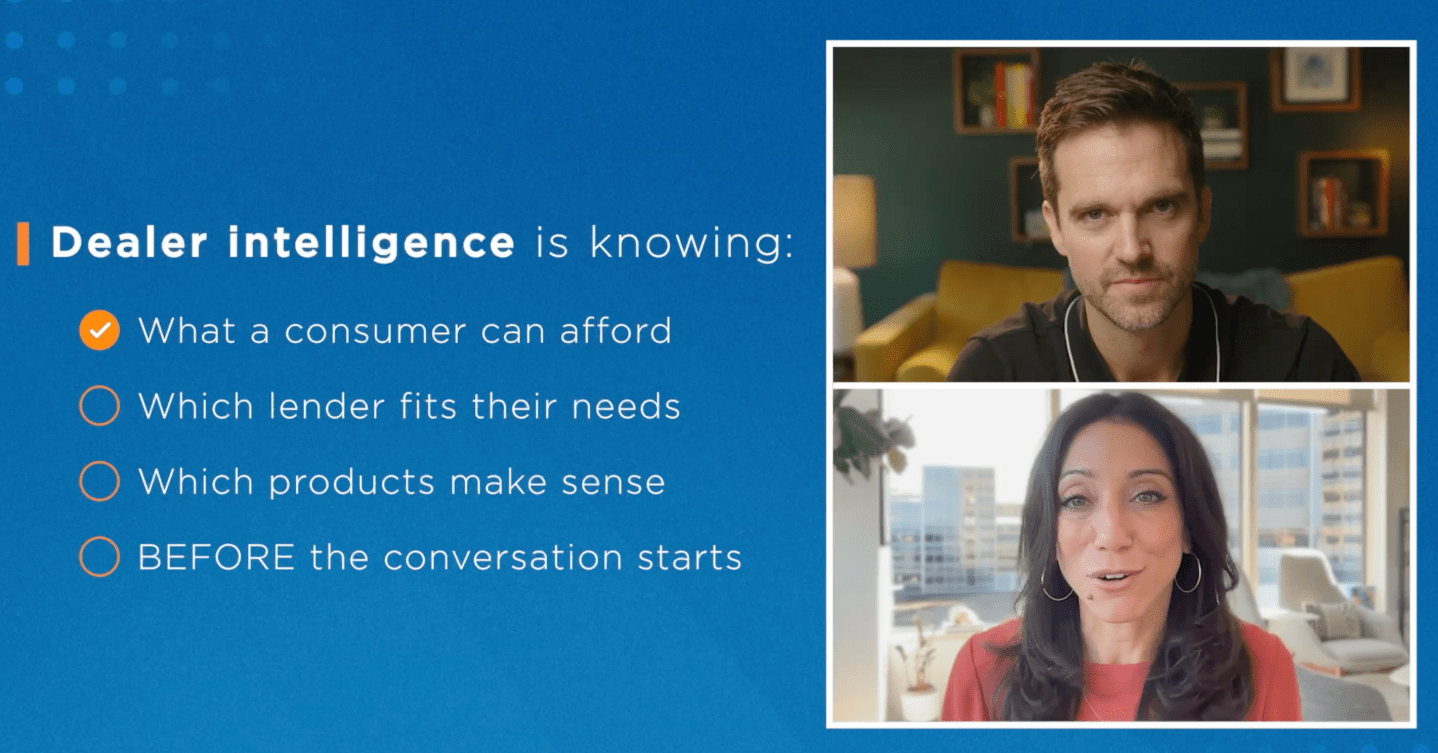
NOAH: Yeah, 100%. So, you know, thankfully with the miracles of technology and with Cox Automotive, we have insights from about eight out of ten shoppers nationwide in real time. So once they’re inside of our network, across AutoTrader, Kelley Blue Book, Dealer.com, we’re able to digest that and show you, the dealer, what vehicles they’re actually interested in. But not only that, it’s how likely are they to buy, what their trade-in might be, their likelihood to want to trade in that vehicle, and also see all the vehicles that they’ve looked at in the past leading up to that conversation they’ve had with you. The other thing, too, is it’s aggregating that information and giving it to your salespeople. So they’re not just smiling and dialing random people inside of your CRM and getting rejected 99% of the time. They’re calling people who are actually in market, actually interested in what you have to sell. So really, I keep going back to process because I’m such a nerd about that. But every time that you have a waste that you’re repeating over and over again, it compounds, and it loses you money. So, if you can eliminate those things where it’s like, “I called the guy who slammed the phone on me” and replace it with, you know, ten good calls with actual conversations with people who are interested in selling you their car, which is probably the best source of inventory you can get. But also, they’re in market for their next car? Man, it’s just a win win.
MATT: Got it. Now I mean, Cox Automotive has so many tools. I mean you even mentioned we talked about Xtime. You know there’s obviously AutoTrader and Kelley Blue Book. There’s Vin solutions. There’s V-Auto… Connection seems like a really important piece here. So can we talk about that for a second, about the connected data, and the connected tech stack? How do you make that work for you if you’re a dealer?
NOAH: Yeah, so every time there’s a handoff, if your stuff’s not connected, that’s leaking money. Literally. So what it kind of looks like is all right: somebody’s shopping at AutoTrader. We know what they’re interested in. We know how likely they are to buy, etc. They land on a dealer.com website. That taps into that network. We understand who they are, what they’re interested in. We serve up inventory that they’re interested in and specials for the vehicles that we know that they’re interested in. Once they submit that lead into the CRM, we have that customer profile, so, Matt Maher, well all of your behavior starts getting connected to you. And that makes us, as salespeople, way more informed so we can serve you better. But it’s not just that, right? It’s the process stuff. It’s the data that’s coming across. So, if we can get somebody into digital retailing experience earlier in the process, that means we can collect their data and their information earlier and transfer that across different solutions. So if they were to come into the store, well they’ve already figured out what they want their payment to be. They’ve submitted their credit application, they’ve looked at finance and insurance products, etc. Now, you can pick it up in store without having them reenter that data, you’re eliminating that waste. The shopper’s happier. You can complete more of that process faster. And then, all right, let’s take that data and plug it into our desking solution. You’re not having to reenter it. You can negotiate without having to go back and forth walking and literally transporting a piece of paper back and forth and frustrating the customer because it takes forever. Once you finalize that deal, a customer says, yep, I like those numbers. Boom, they’re already in your contracting solution, right? Dealertrack. And you’re not having to reenter that information again. You’ve already got their finance application. You’ve already got a credit approval on the deal and an approval from the lenders. So building out that contract is super easy because you’re once again not having to take information from one thing and manually put it in, because every time you have to do that, it introduces potential for error. We’re human. We mess up. I’m typing in numbers all day, every day. Or you fat finger things and that means you have to rework it. And that adds up to wasted time, money, and dollars out the door.
MATT: So I want to close on this insight here, which often might feel like a paradox, but it’s transparency. And I think that has been the hardest one to understand as dealerships, because again, the old model, information asymmetry, having more information than the person walking in the door, was a huge benefit. But now, large language models, unbelievable search and tools that consumers are walking in so smart, so educated. Can you double click on how transparency is a feature, not a bug of a dealership?
NOAH: 100%. So yeah, in the past, dealerships, you had the information advantage. You knew more about the vehicles, what kind of rates were out there, etc. Now shoppers are more informed than ever, especially with LLMs. We’re seeing more and more shoppers using them in their shopping process. And we’re also seeing companies coming up with agents that will research vehicles, dealerships, send offers and negotiate on behalf of that customer. So it’s literally, and I say this a lot, they’ve got the T-1000 working for them. Now, that does not mean that is necessarily a bad thing for you if you play your cards right. So yeah, number one is being transparent with your pricing, because if they are using an agent, they are going to skip you and say, you know, they’re not worth working with if you say, “hey, you got to come in for numbers.” Well, they’re going to find five other dealerships that are going to provide those numbers. And those agents aggregate all of that data and they give you a rating. So they’ll review you and say, all right, this guy’s got an A for transparency. Or this guy’s got a D-. They’re going to go with the dealerships that has an A. Now the other thing too is those LLMs that these folks are using, they’re actually making them better prepared. And once they choose you as a dealership, so ChatGPT recommends you as a dealership, that means that that person is basically committed because they trust these LLMs a little too much. So you’ve won, and it’s going to prepare them, “hey, you know, you should bring in your identity, your ID, your proof of insurance, your proof of income, and unlock your credit before you come into the dealership, here’s why.” So you’ve got a shopper who’s more prepared, more committed to that purchase because that LLM recommended you. But you have to play your cards right. Be transparent, have good SEO, have a good online reputation, and you’re going to do really well.
THE FINAL WORD
MATT: The final word: first party data. Let’s unpack that, Noah.
NOAH: Yeah. So first party data. We’ve been talking about it for years. It’s literally data that you own. Somebody visits your website, you own that behavioral data that’s coming in. Now what you do with that data is incredibly important. Digesting that and connecting it to a customer profile. The other thing too, I’m gonna expand on just first party data, is just looking at how you’ve set up the foundation of your dealership. So phase one: make sure your inventory is dialed in. So use first party data, and guess what, Cox automotive has got a ton of it, especially around inventory. So dial in, make sure your inventory is acquired correctly, and priced correctly, etc. You got that dialed in. Number 2: lock in your processes. Make sure those are rock solid and you’re eliminating all of those leaks. So when people interact with your dealership, it’s super positive, super fast. You’re using first party data to share across those different solutions. Once you’ve got your sales process dialed in, that’s where you want to expand your reach with advertising, and first-party data helps you be more effective than ever because you get incredible audience data, so you can hyper target shoppers who are in-market for vehicles or services that you sell. And if you’ve got the great process, you’ve got the great reputation. You can expand your reach for people who are 2 or 300 miles away, or even further out. But if you’ve got these great processes and you’re offering vehicle delivery, people will pay the money because you make it easy for them to spend it.
CLOSING
MATT: So Noah, this was fantastic. Again, for those who are watching this episode, I would say it feels like an appetizer. Where can we get more? Tell us where can we understand more of all these solutions Cox has and everything you’re talking about?
NOAH: Yeah, just go to the Cox Automotive website. We have just an incredible wealth of knowledge. It’s all free basically. We’re posting studies basically every week. I gotta give a big shout out to Jonathan Smoke, who is our chief strategy officer. He dives into the data like you wouldn’t believe and turns it into information that you can use. Doesn’t matter what services you’re using, it’s going to give you the info you need to make good decisions. So that’s #1: check out Cox automotive.com. The other thing I’ve got my my little podcast I get dozens of views called “Droppin’ Knowledge with Noah.” It’s on YouTube. Search it up. Lots of great stuff. I interview a ton of really, really smart people who are smarter than me, about how dealerships can take their operations to that next level. So check it out.
MATT: Awesome. Well, Noah, maybe I can get a soft commitment for maybe another episode of Driving Impact?.
NOAH: Let’s do it.
MATT: Yes! All right. Good, good, good. Wonderful to see you, my friend. I’ll see you soon.
NOAH: Thanks, Matt.