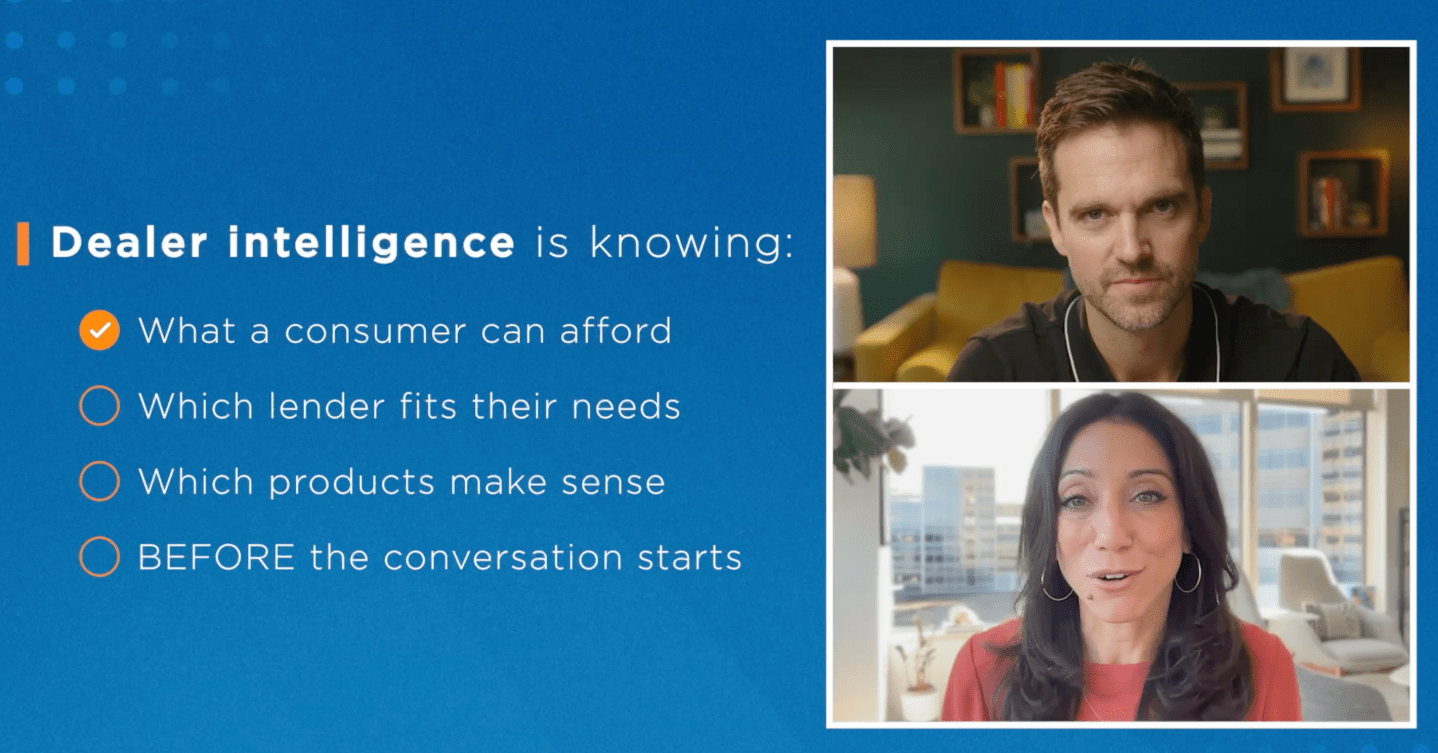
In this episode of Driving Impact, Matt Maher sits down with Jessica Stafford to discuss what today’s car buyers value most and how dealers can evolve alongside changing expectations. From digital retailing and automotive financing to AI’s growing role in automotive retail, they share insights from Cox Automotive research and real-world dealership examples. The conversation explores practical ways to streamline the car-buying experience, connect online and in-store interactions, reduce deal times, and build customer trust. Whether you’re focused on improving customer experience, increasing dealership profitability, or strengthening customer loyalty, you’ll find ideas you can put into practice.
Episode Transcript
Introduction
JESS: If your average deal time is still taking three, four hours, you’re creating too much friction in the process. Create the very best customer experience. If you kind of stay true to that as your North Star on how you’re operating your dealership, you’ll end up in this place where you really can connect all the tools. All of those points of technology are now enabling us to create this seamless, frictionless experience for customers. And that’s what they’re looking for, because that’s how they shop for everything these days.
MATT: Welcome back to Driving Impact. I’m Matt Maher, founder of M7 Innovations, and today I’m joined by someone I had the pleasure of intellectually sparring with on stage at NADA 2026 back in February. We covered a lot of ground that day on AI, on dealers, on what’s actually working, what isn’t, and a lot has happened since then, and there’s even more to dig into. So, Jess Stafford, welcome to the show. How are you, Jess?
JESS: I’m so good, and I am so happy to be here today and to get to talk to you. I mean, you. It really is insane how much has changed since that Nada conversation, which was really just a few months ago. And I think, you know, what’s ironic is, like, we were talking about the pace of change back then, the pace of adoption of AI and how much it was accelerating even then. And, I mean, I think we can, you know, jump into the future here, and that definitely happened.
MATT: We will be time travelers. We will sit in the present, we’ll go to the future, we’re going to go back to the past, too, and how to bring some people in the past to the future. But I do think what we are going to get into today is something that I feel every dealer watching has felt, but, like, maybe they don’t have language for yet. And that is that the buying process is breaking down. And it’s not because dealers, like, aren’t trying. It’s because the customer has moved and the process hasn’t really kept up. And I feel like you are on the ground floor of all of this, you can give us ground truth. So if you’re into it, I think that’s what we’ll get into today.
JESS: Let’s do it. Let’s do it.
LIGHTNING ROUND
MATT: Jess, question number one. The moment in the buying process where dealers lose the most customers.
JESS: The “when can you come in” moment for those dealers who are still trying to get shoppers to come into the showroom before they’ll give any information online or even over the phone.
MATT: One thing dealers still do that customers stopped tolerating five years ago.
JESS: Maybe it’s that whole like “let me go talk to my manager” move. People aren’t putting up with that anymore.
MATT: Shrouded in mystery. No one likes that.
JESS: Yeah.
MATT: One metric that tells you immediately whether a dealership is running well.
JESS: Repeat customers. Loyalty. Something that tells you right away, is this dealership working or not?
MATT: The part of the deal where AI makes the biggest difference right now.
JESS: Financing, I would say is the biggest difference. But we’re definitely seeing a lot of usage in the shopping, the comparison, kind of that part of the process for sure.
MATT: The biggest misconception dealers have about what customers actually want.
JESS: The cheapest deal.
MATT: Really?
JESS: Yes.
MATT: I want to think of it as a lightning round. I can’t! Last one. One thing every dealer should do differently before their next deal.
JESS: Lean into the data you have. Really understand more about the customer before you start the next deal.
MATT: Well, you did not only survive, Jess, you thrived in our lightning round.
STATS CHECK
MATT: Jess, I pulled two data points from Cox’s own research that I have here that I want to bring out because I think they’re impactful, I think they’re salient and I want your honest reaction of what it actually means. Does that sound good?
JESS: Yeah, that sounds great.
MATT: All right, first data point I have here: 63% of car buyers say their ideal buying experience would be a mix of online and in store, but only 7% actually bought completely online. Your reaction?
JESS: So what’s cool here is customers, they’re not actually asking to sit on their couch and buy a car end-to-end from their phone without asking any humans any questions or touching and feeling the car. What they’re asking for is for the process to not reset every time they walk through a new door, whether that’s online or in the store. You know, they’ve already done a lot of work ahead of time. They maybe have picked out their car, they’ve penciled a payment, they might have started a credit application. And then they walk into a dealership and someone asks them to start all over again from scratch. And so that’s the gap. And it’s not a small one, it’s huge. And so every time that happens, the dealer is leaving money on the table, they’re leaving potential loyalty from this customer on the table. You know, shoppers want this combined connected kind of multi-channel experience that carries with them from platform to platform, from online to in store. And so that’s what we’re hearing from people when they talk about wanting that, that buying process, that’s a mix of both online and in store.
MATT: It goes back to what you said. Connectivity seems to be the theme. Like if, if systems are connected, if the buying experience is connected, the more you connect that, it sounds like just a better customer experience. Right?
JESS: That’s right. That’s exactly right.
MATT: Great. So let’s get into this second stat here. So this stat is from a Cox study, the Automotive Retail study, that dealers who connect the online and in store experience see 67% higher impact on gross profit and close rates that are nearly 80% higher than average. Tell us what’s happening behind that.
JESS: Big time numbers. And, and really this one makes a ton of sense. It’s just like you were just saying, Matt. Think about, think about how you shop for, or buy cars or really anything. When your experience is connected, when it’s personalized, when, when you stay in the deal, you stay in the path, and not only do you stay in the deal, but you’re kind of pulled further in. You’re ushered through the process, you’re ushered through the steps in the process. The more connected that is, the more you trust the process. And so you’re likely to walk through that process seamlessly. And you’re less likely to walk away from the deal. And so the dealers who are seeing those results you’re talking about, they’re not necessarily doing anything magical. They’ve just, they’ve stopped making their customers repeat themselves. And those who are really getting it are not only connecting those experiences, but they’re using data, they’re using information to get shoppers intrigued enough to take the next step in the process.
MATT: I want to go back to something you said in the lightning round of those little moments of like, “let me go talk to my manager.” I think there are probably so many of those like subtle, nuanced moments that actually could fracture all the connectivity that you’re talking about. So can you kind of give me that real world example? Like I walk in on a Saturday afternoon. What are some of those moments or what are some of those things that dealers have to watch out for to say don’t, don’t create this fracture, don’t create this rift in that process?
JESS: Yeah, sometimes, you know, consumers are ready to step in the door on that Saturday and take a look at the car and ask more questions. But a lot of times if they’re reaching out, if they’re engaging online, they want the dealer to engage with them back in that way. And so those steps in the process you got to really lean into what your customer is looking for. And so that’s kind of that first breaking point. That first friction is when you’re not open and giving as much information as your customer might be looking for while they’re still kind of stepping through the process online. And then once you do walk in the door, like we were talking about, connecting the systems, connecting your approach to that customer so that you’re not making them start all over again, that’s another big friction point. If you did all this work online, you walk in, even if maybe you’ve made an appointment and you walk in and you’re ready to continue your process forward. But maybe the dealer greets you and says, hey, what are you looking for today? Or, oh, I see that you looked at this car. Okay, tell me what your trade looks like. Tell me what you’re. And it’s like, I already put all that stuff into the system online. I already even maybe did my credit app. And so that’s a point of friction. And then I would say there’s more of them through the process when you might be negotiating or you might be talking back and forth. And there’s that “Let me go ask my manager about it.” Or, even some of the more modern technology when. When a dealer takes your ID away to make a copy of it in order to put that in the system so you can do a test drive. You know, there’s so much technology nowadays, you can do that ahead of time. The customer might have been able to put their ID in for verification and tracking, even online from their phone, before they walk in the door. And so all of those points of technology are now enabling us to create this seamless, frictionless experience for customers. And that’s what they’re looking for, because that’s how they shop for everything these days.
MATT: So I feel like you’re very clairvoyant and you see where the world is moving. I have one more data point I want to throw up, and I want to actually see, like, does it surprise you or not? So I’ve seen some data points that say, like, “nearly half of buyers want to complete their credit application before they even show up.” Does that surprise you, or is that where we’re at now?
JESS: Not at all. Not at all. I mean, we see a lot of people online, that, you know, they feel confident that behind the screen, they have this chance to look at what their credit looks like, see what they could afford, understand what the monthly payments look like from the comfort of their couch and on their phone. And eventually we do see they want to ask questions, they want to talk to a real human being still, combined with being open to AI and all these conversations. But, they want to do as many steps of that process ahead of time because this is a really big purchase for consumers, and they’re nervous about it and they want to learn as much as they can. And this gives them a chance to do that kind of on their own time, and get themselves ready for the conversation. And frankly, we see it not just in credit. 40% of consumers want to choose their finance products online too, yet get this stat, only 16% actually do.
So the desire is there, the demand is there. It’s just, we’re not there yet as an industry of truly enabling that to happen. And so that the gap is not a consumer problem. It’s making sure that the tools and the enablement is there. And that dealers are setting up their systems, not only their systems, but their approach, their approach to the sale in that way. And so every one of those gaps is in place where when that happens, the deal actually slows down, the customer gets frustrated, the profit disappears. And that’s not what any of us want.
THE IDEAL STATE
MATT: This connected process. Can you walk me through what a fully connected process actually looks like?
JESS: Yes. Okay. So the dream unicorn process, what it looks like, I mean, highest level, it looks like this customer’s information flowing with them in like a digital wallet throughout their entire process for the first moment that they engage. Now keep in mind that the first moment they engage could look like seeing an ad, or reading an article through social media about a new family suv. That’s that first moment of this spark of a consumer looking for a new car, realizing they need a new car, starting the process, it’s very early on. And even that view of an advertisement, that message that they see, that editorial video that they watch, that is a data point. And that information, that behavioral information and the information that that consumer then puts into the process, flows with them every step of the way. So it’s from research to deal structuring online to walking into the dealership, and being met where they are, that information flowing through and that part being seamless. And what’s pretty cool is that that could be online in-store, finish the deal, drive home with your brand new car. It could be online, in-store, do a test drive, come home and finish the deal online. That is all possible now in this connected world. And so that perfect experience is this seamless flow where the customer feels like the process is there. It’s streamlined, and the whole things moves faster and the dealer ultimately makes more money off the deal.
MATT: So can you now tell me what does the finance office in its highest and best look like in this type of dealership?
JESS: Okay, so this part’s cool. The customer has already seen finance options that are relevant to them online before they come in the dealership, before they sit down at the finance desk. Not every option on the menu, but they’re going to see the ones that are right for their deal because we know so much information about them, so we’ve personalized the experience. And, I mentioned that stat earlier: people want to see those menu options ahead of time. They’re much more likely to close on those options online and in the store when they have a chance to see them multiple times. So they’ve come in, they’ve seen them online, the customer’s already seen it. So by the time they’re in your finance office. The conversation is kind of like a confirmation, not another pitch. They sign once, they’re out the door in a fraction of the time. The finance manager is, in this case, they’re spending their time on the deals that need that human touch, that maybe need a little extra care. They’re not reentering information that the customer already gave you three days ago. In fact, you go back up to a statistic you said in the beginning: the 7% of people who want to actually do that deal completely online? They can now with these financing options. They can, they can, they can do it all online. And then for those who want to do a lot of work online, but then come in the store, the finance manager’s got all these tools. It can be seamless. And even those folks that I mentioned earlier want to do a little bit of everything. They want to be online, they want to go in-store, then they want to go back online. Now, for our finance managers, our options here are endless in having tools that enable that deal to flow.
MATT: So in that type of dealership now, the world’s accelerating. All these different numbers, different key performance indicators, or KPIs. Can you tell me, like, what’s, what’s a number? Or what’s the number that tells a dealer, “hey, we’re there, we’re actually connected. We’re at this level”
JESS: We’re doing this. You know, I mean, you think about one metric. Deal time is really the honest one. You know, we, as human beings, we value our time more than anything. And so this is a great measure for both customer satisfaction as well as, like, are you moving on all cylinders, like you said? So if your average deal time is still taking three, four hours, look, at the end of the day, your process isn’t connected. It couldn’t be. You’re creating too much friction in the process. Now, back end gross per deal tells you whether the finance offices work in the right way and whether we’re ending up being profitable. And customer satisfaction, like I mentioned, that tells you whether the experience is matching what you think you’re delivering or are your customers excited by it. So you really want to lean in and pick the most painful one that’s in your store right now, start tracking that, start diagnosing it. But at the end of the day, I think you’ve got some ways to measure is it really working? And I would say deal time is a good starting point. And then, like I mentioned, kind of that lagging indicator is like, are you getting repeat visitation? Are you getting your customers to be loyal because you gave them this seamless, wonderful, efficient experience?
MATT: That’s amazing. It makes me think of, with all the tools, with all the AI, it’s so many, like, solutions looking for problems. But deal time is so powerful because if you actually look at that, you can start to see where the problems are and then start to apply some of these tools that you’re saying to start to mitigate that and collapse that delta of time.
JESS: Yes.
MATT: So, Jess, this sounds like a wonderful ideal state, but I know, like, your boots on the ground. Have you anecdotally seen this in a dealership happening?
JESS: Yeah. I actually have an amazing client up in the Northeast who is open to trying anything. They love to implement new products, new tools, but their key is they understand that, look, at the end of the day, we need to close profitable deals. But we know that the best way to do that is to create the very best customer experience. If you kind of stay true to that as your vision, your North Star on how you’re operating your dealership, you’ll end up in this place where you really can connect all the tools. And so I know for them, I’ve seen it firsthand. I’ve literally seen consumers walk in the front door and their sales folks greet them, figure out who they are, look them up really quick. “Okay, I see here, did you bring your trade in for us to take a look at? And I have that car pulled up so that you can test drive it right now. Are you ready to go?” It’s those kinds of frictionless experiences where the person is almost, I mean, and I’ve seen this too, like, surprised by it. It’s like, surprised and delighted when you walk in and you’re like, I, you know, I might have been ready to, like, think about how I’m going to… all the information I put in online and how am I going to, you know, rehash that with this salesperson at the dealership. But, you know, to your point, firsthand, I’ve seen it work perfectly. And it, when it works, it just flows. And again, I think at the end of the day, this enables that customer to actually enjoy this experience that can be super frustrating and stressful, but I’ve seen it work.
MATT: This is such a big purchase for customers. It’s one of the biggest purchases in their lives. And they only do it so many times in their lives. But what I thought was so powerful is it sounds like for as big as a purchase, it’s the little things that a dealership can do that can actually make the difference. Is that correct?
JESS: You know, it’s a great insight. You’re right. This is the second biggest purchase people will make for most folks in their life. And, they don’t do it very often. And so the whole experience has changed each time the typical customer goes through it, and so they don’t know what to expect. But the moment that they feel more at ease, it just makes a world of difference in this process. Those little steps, iterative, you know, incremental, continuing to change. And that’s a great pointer for dealers out there. You don’t have to change the whole thing at once. Take it one step at a time, and you’ll make a difference.
THE FINAL WORD
MATT: The final word, Jess, is deal flow.
JESS: All right, well, this connects everything we were just talking about. It’s the path that a deal takes from that moment that a customer first engages to the moment that they drive away in their brand new car. Every time that flow breaks down, the dealer loses time, they lose money, they lose the customer ultimately. And most dealers think that their deal starts when the customer walks in the door. But it starts the moment they go online. The moment of that first spark of realizing I’m in the market for a car and I need to figure out what I need and who I’m going to buy it from. So connecting those two moments, that first spark to that happy moment, walking off with your brand new car, it’s the single biggest operational opportunity that most dealers just haven’t fully tackled yet. And so the idea here I would leave you with, from a deal flow standpoint, is to operationalize, optimize and monetize the flow, not the friction.
MATT: Oh, my goodness. I mean, that’s how you close it right there.
CLOSING
MATT: That was wonderful, Jess. And here’s some even better news. I know we’re gonna get you back for episode six, which I know we’ll film in a few weeks or a month. And how much do you think is gonna change by that point?
JESS: I mean, thinking about how much changed in the last six months, who knows? I mean, we’ll have a lot more to talk about again.
MATT: That’s right. This episode’s gonna be old news at this point. For everyone watching, we will see you again in two weeks in the next episode of Driving Impact.