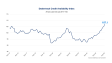
New-vehicle inventory declined in July as consumers purchased vehicles at a faster pace than automakers replenished dealer lots. According to data from vAuto Live Market View, available inventory at the start of August totaled 2.73 million units, down 3.5% from a month earlier and essentially flat compared with a year ago. July sales increased 8.5% from June and were up 2.9% year over year, helping reduce national days’ supply to 75 days from a revised 82 days at the beginning of July. The shift suggests the market is moving toward a healthier balance, with demand absorbing inventory more quickly than earlier in the year.
2.73M
Available Units
75
Days’ Supply
$49,249
Average Listing Price
Sales Momentum Tightens Inventory
Stronger sales were particularly evident in several of the industry’s most important segments. Midsize SUVs posted one of the largest declines in days’ supply, falling nearly 14 days during the month, while full-size truck supply tightened by 10 days as sales rose nearly 16%. Performance in these high-volume segments suggests consumer demand remained healthy despite affordability challenges and elevated vehicle prices.
Pricing Remains Stable as Incentives Decline
The average new-vehicle listing price was $49,249 at the end of July, unchanged from the end of June and up only 1.6% year over year. Stable pricing alongside declining inventory suggests stronger demand is absorbing available supply without creating upward pressure on prices. Unlike the supply-constrained environment of recent years, inventory levels remain sufficient to support consumer choice even as sales activity improves.
Meanwhile, the average transaction price (ATP) in July was $49,855, according to Kelley Blue Book, up 1.9% year over year, and the average manufacturer’s suggested retail price was $51,621 in July, also higher year over year by 1.9%.
Incentive spending declined for the second consecutive month in July, falling to $3,192 per vehicle, or 6.4% of ATP, down from 7% in June and 7.3% a year earlier. The decline suggests automakers are facing less pressure to stimulate demand as inventory levels tighten. Even so, spending was elevated in many of the best-selling segments, including full-size pickup trucks (8.6%), compact SUVs (7.8%) and mid-size SUVs (6.8%).
Inventory Strategies Continue to Vary by Brand
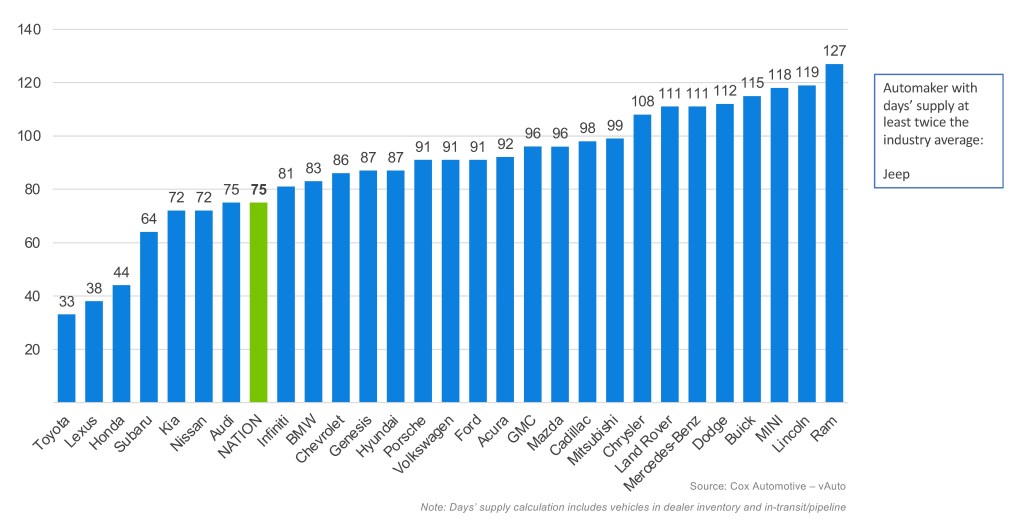
Brand-level results also highlight differing inventory strategies. While some automakers appear focused on carefully matching production with demand, others continue replenishing dealer inventories as sales improve. Stellantis made further progress reducing days’ supply during July, but ongoing production tempered the pace of improvement. The company continues to work through elevated inventory levels while maintaining output, though this is expected as the group continues on its product offensive to refresh its lineup. At the other end of the spectrum, Toyota, Lexus and Honda continue operating with among the tightest inventories in the industry, highlighting the wide variation in inventory positions across automakers.
July Days’ Supply of Inventory by Brand
EV Growth Lags the Broader Market
Electric vehicles (EV) sales continued to trail the broader market in July. EV sales increased 2.7% month over month, well below the overall market’s 8.5% gain, resulting in only a modest 2.1-day reduction in days’ supply. By comparison, internal combustion engine (ICE) and hybrid vehicles saw supply tighten by 6.5 days, reinforcing that conventional and hybrid models continue to drive most of the market’s momentum.
Cautious MY2027 Rollout Shapes Inventory Patterns
Beyond current sales trends, the more notable story may be what is not yet arriving on dealer lots. While model-year 2027 vehicles increased to 5.6% of available inventory, up from 3.3% a month earlier, the industry remains well behind last year’s launch pace. Dealers currently have only about half as many MY2027 vehicles in stock as they had MY2026 vehicles at the same point last year, indicating many automakers are taking a more measured approach to introducing new inventory.
The gradual rollout of MY2027 vehicles is also influencing segment-level inventory patterns. Among major segments, full-size SUVs and full-size luxury SUVs were the only categories to post meaningful increases in days’ supply during July. Supply rose 3.7 days for full-size SUVs and 9.4 days for full-size luxury SUVs, some of which reflects fresh arrivals of MY2027 inventory reaching dealer lots. Those increases stand in contrast to tightening conditions across most other segments and highlight how new-model launches can temporarily boost inventory even when broader market supply is falling.
Heading into the fall selling season, the new-vehicle market appears increasingly balanced. Inventory remains near year-ago levels, pricing has been remarkably stable, and stronger demand is steadily working through available supply in many key segments. While affordability remains a challenge for many households, vehicle prices have shown little upward movement and inventory levels continue to provide consumers a broad range of choices. At the same time, the slower-than-normal rollout of MY2027 vehicles suggests many automakers remain cautious about expanding inventory too aggressively. For now, sales momentum is proving strong enough to tighten market conditions without creating meaningful upward pressure on prices.
View Historical New Vehicle Inventory reports.