
A shopper looking for a family SUV used to begin the buying journey by searching an automotive marketplace or dealership website.
Now, they’re starting with a question.
“Which SUV has the best safety ratings?” “What’s the best 3-row SUV under $40,000?” “Which dealerships nearby have the best ratings?“
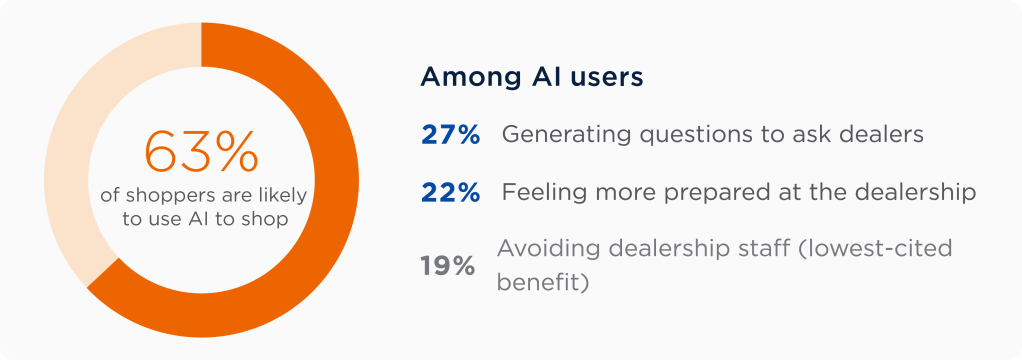
More often than not, those questions are being directed to AI tools. According to the latest study by Cox Automotive, the AI in Auto Retail Tracker, 63% of in-market vehicle shoppers say they ‘definitely or probably will use’ AI during their next vehicle purchase journey. At the same time, AI tools are approaching parity with automotive shopping sites as a vehicle research source. The result is a shopping experience increasingly centered on recommendations, summaries, and answers rather than lists of links.
For dealers, that raises an important question:
If shoppers are increasingly asking AI where to find the right vehicle, will your inventory be part of the answer?
AI Can’t Recommend What It Can’t Understand
When shoppers use traditional search, they’re responsible for sorting through results.
When shoppers use AI, the system does the bulk of that work for them.
A request such as: “Find a three-row SUV under $40,000 with good fuel economy near me” requires AI to understand available inventory, compare vehicle attributes, assess relevance, and identify potential sources.
If vehicle information is incomplete, inconsistent, or difficult to interpret, inventory becomes harder for AI systems to surface confidently.
That’s why the quality of inventory data is becoming increasingly important.
Three Ways to Improve Inventory Visibility in an AI-Driven Search Environment
1. Give AI More Than the Basics
Many inventory listings focus on the fundamentals: year, make, model, mileage, and price.
AI systems can use much richer information.
Features, packages, fuel economy, safety technologies, seating capacity, towing capabilities, drivetrain configurations, and certification status all help AI make stronger connections between shopper questions and available inventory.
The more complete the inventory data, the easier it becomes for AI systems to understand which vehicles match a consumer’s needs.
2. Ensure Consistency Across Your Digital Presence
Inventory is only part of the equation.
Business information, operating hours, locations, services, and other dealership details should be consistent wherever shoppers and AI systems encounter them.
Conflicting information creates uncertainty. Consistent information creates confidence.
For AI-powered search experiences, confidence often influences which sources get referenced.
3. Answer the Questions Shoppers Are Already Asking
The AI Tracker found that consumers are using AI to research vehicles, compare options, and prepare for dealership conversations. They’re looking for guidance, not just listings.
Dealership content should reflect that behavior:
- Vehicle comparisons.
- Trade-in guidance.
- Financing FAQs.
- Family vehicle recommendations.
- Electric vehicle ownership considerations.
These types of answers help establish context around inventory and provide AI systems with additional signals about dealership expertise.
Visibility Starts Before a Shopper Visits Your Website
One of the more important findings from the AI Tracker is that consumers aren’t using AI to avoid dealerships. They’re using it to become more informed before engaging with one.
That means AI isn’t replacing the dealership experience, it’s influencing which dealerships and vehicles get considered in the first place.
As answer engines become more integrated into the shopping journey, dealers should think beyond traffic and rankings alone. The goal is helping AI systems confidently understand inventory, business information, and expertise well enough to recommend them when consumers ask for guidance.
Because in an AI-enabled shopping journey, visibility increasingly begins before a shopper ever clicks a link.
Explore the Research
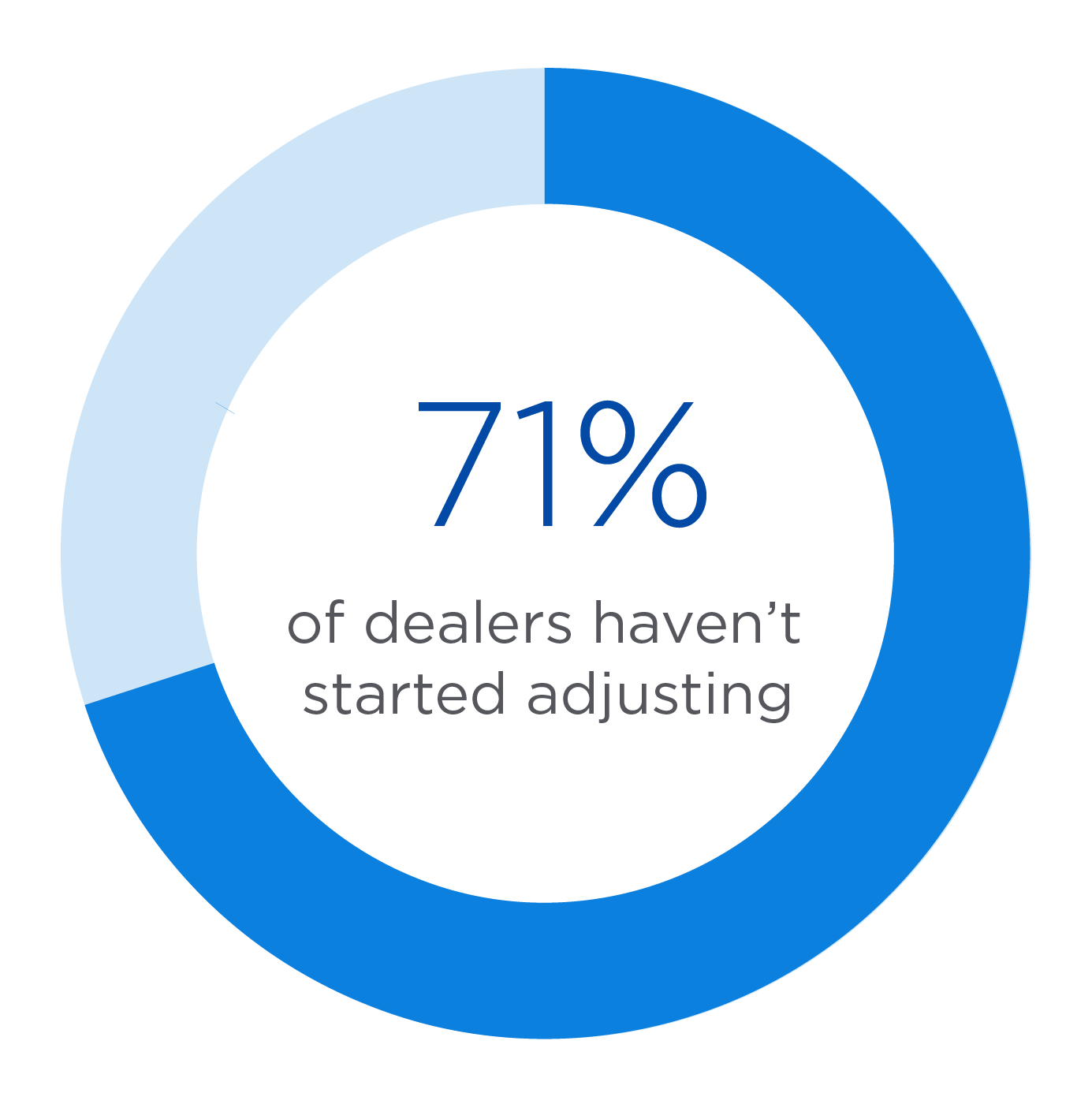
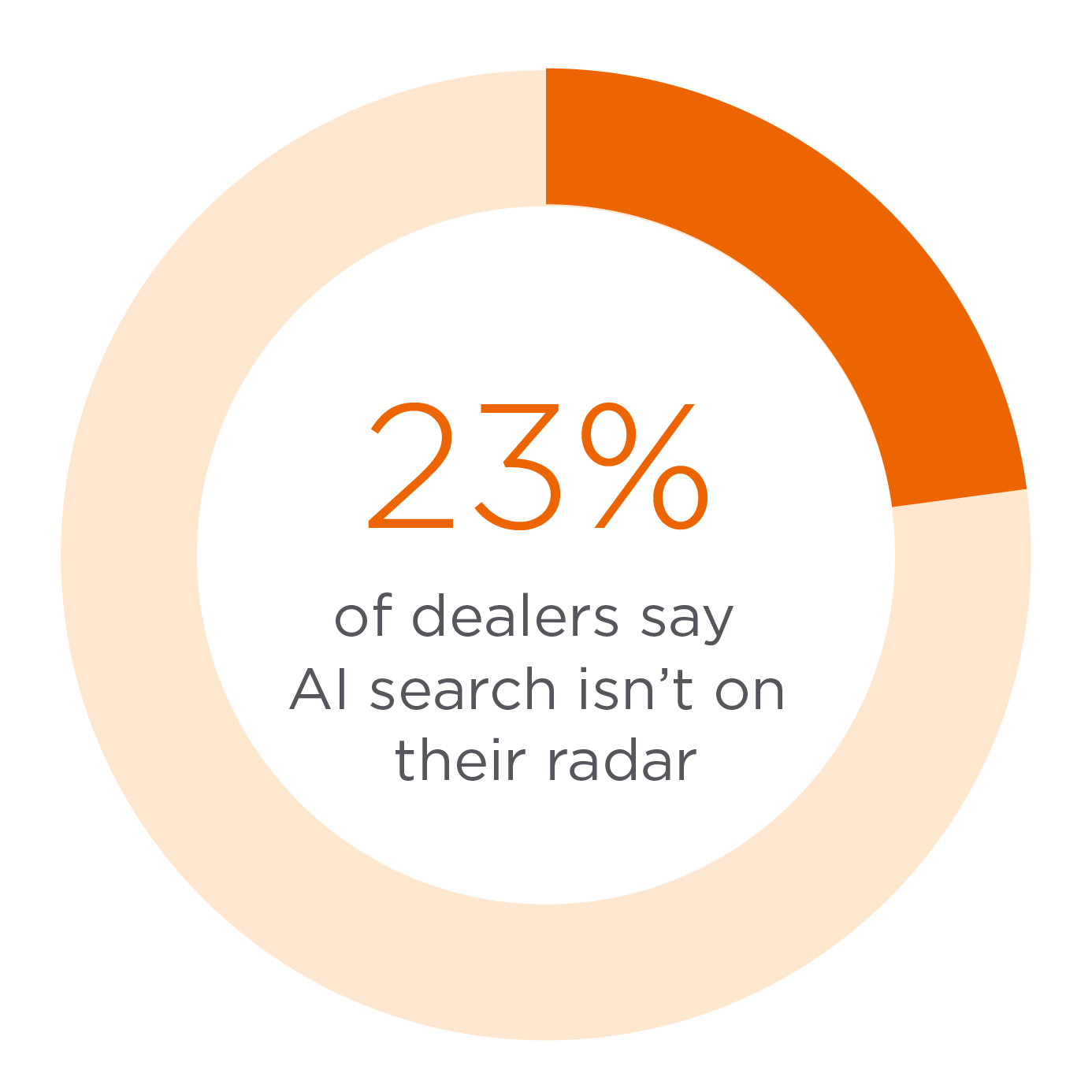
The findings referenced in this article come from the Cox Automotive AI in Auto Retail Tracker, a new quarterly study examining dealer adoption, consumer behavior, business impact, and emerging best practices related to artificial intelligence in automotive retail.