
Stay curious.
But don’t think too hard about AI.
The dealers getting the most out of AI aren’t the ones obsessing over it. Treating AI as its own thing — its own strategy, its own department, its own conversation — may be exactly how dealers get paralyzed.
The dealers getting real value from AI right now are treating it as an iteration on the work they already do.
Only 5% of dealers set out to lead in AI. And yet, nearly two-thirds of AI users are seeing benefits. It’s not the tech bros who are winning the AI race. It’s the dealers running their business well and using AI to do it better.
July 31, 2026
8 min read


01
Adoption
THE QUESTION
Are dealers moving — or waiting?
How are auto dealers using AI in 2026?
Where AI is at work
82%
of dealers use AI today.
40%
Automating routine tasks
40%
Coordinating customer follow-up
38%
Generating content & creative
Adoption has leveled off. Anxiety hasn’t. 52% of dealers now say they’re behind their peers on AI adoption, up directionally from 47% in Q1. Not because they’ve actually fallen behind. Because the goalposts keep moving and the noise keeps getting louder.
How dealers see themselves on AI adoption
Ahead
Behind

Source:
Cox Automotive AI in Auto Retail Tracker. Total dealers (Franchise and Independent): Q1 n=504, Q2 n=483. Fielded March 2026 (Q1) and May 2026 (Q2).
02
Impact
THE QUESTION
Are dealers seeing real impact from AI?
Is AI actually working for car dealerships?
69%
22%
69% of dealers expected AI to drive sales and revenue growth. 22% have actually seen it.
01 — STRATEGIC GAP
Revenue growth was the top expectation. Efficiency is what’s actually showing up.
Expected vs. experienced AI benefits
Sales / revenue growth
Expected
69%
Experienced
22%
Increased employee productivity
Expected
54%
Experienced
26%
Improved bottom line / profit
Expected
51%
Experienced
9%
02 — MEASUREMENT GAP
AI’s impact is hard to measure on its own. “Not sure” is now the most common answer when dealers are asked if AI is meeting expectations — up from 37% to 41%. That uncertainty tracks with a broader measurement gap: 1 in 3 still aren’t formally measuring or lack clarity around AI’s impact.
The measurement blind spot

Not sure if AI results meet expectations
Not measuring / not sure of AI impact

What’s shifted is the nature of the skepticism. ROI and cost was already a top-two barrier in Q1 — now it’s tied with accuracy concerns at the top of the list, both at 45%. That’s closer to “prove it works for my business,” which signals some maturity in adoption even as measurement hasn’t caught up.
Barriers — tracking rank by quarter

And for many dealers, that’s for good reason: AI doesn’t live on an easy-to-define island. In Q1, 68% of dealers believe dealership solutions are becoming more valuable with AI built in. 63% trust AI embedded in their dealership tools more than standalone AI.
Source: Cox Automotive AI in Auto Retail Tracker. Total dealers: Q1 n=504, Q2 n=483. Fielded March 2026 (Q1) and May 2026 (Q2).
03
Consumer demand
THE QUESTION
Are dealers keeping up with consumers?
How are car shoppers using AI to research vehicles?
63%
29%
63% of shoppers plan to use AI to shop for their next vehicle. Only 29% of dealers have started adjusting for AI-powered search.
Consumers have already moved. 63% of in-market shoppers say they definitely or probably will use AI on their next vehicle purchase. AI tools (36%) are nearly at parity with automotive-specific sites (38%) as a vehicle research channel.
But consumers aren’t using AI to bypass dealers. They’re using it to engage better. The customer walking in tomorrow has already done the homework. The question is whether the dealership is ready to meet them there.
Consumers are showing up ready — and using AI to engage, not avoid.
Among AI-users: ways AI helps with the dealer relationship
26%
Generating questions to ask dealers
24%
Feeling more prepared at the dealership
17%
Avoiding dealership staff (lowest-cited benefit)
But most dealers still haven’t taken action on AI search.
Actively adjusting / in process (Q1 32%)
29%
Know they need to act, haven’t started (Q1 26%)
32%
Not sure what it means (Q1 23%)
26%
Not on their radar / not a priority (Q1 19%)
23%
Source: Cox Automotive AI in Auto Retail Tracker. Dealers: Q2 n=483. Next-12-month vehicle intenders: Q2 n=1,502.
04
Best practices
THE QUESTION
What are top-performing dealers doing differently with AI?
What does AI success look like for car dealerships?
You don’t need to be an AI expert to win with AI. You need experts on your bench. The dealers getting the most out of AI are surrounding themselves with the right people and the right tools, then trusting them to handle the mechanics.
And yet only 13% of dealers have an outside AI partner. That’s the gap between what’s working and what’s happening.
The partner premium, four ways (Q1+Q2 Combined Base)
How much more likely partner-supported dealers are to win on each measure
+20 PTS
More likely to feel they’re using AI optimally
66%
With
46%
Without
+22 PTS
More likely to be highly confident in AI outputs
30%
With
8%
Without
+21 PTS
More likely to feel ahead of peers on adoption
31%
With
10%
Without
+14 PTS
More likely to say AI results beat expectations
26%
With
12%
Without
The opportunity isn’t only outside the dealership. About 1 in 3 dealerships have an internal AI champion, most often someone in marketing or sales. The dealers who let that person lead the way for the rest of the team are giving themselves a head start without asking everyone to become AI-fluent at once.
Two Roles, Two Strengths (Q1+Q2 Combined Base)
External partner → financial lift
+17 PTS
see a financial benefit overall
47%
With
30%
Without
+15 PTS
see sales & revenue growth
36%
With
21%
Without
External partners usually come from an existing provider relationship.
Internal champion → efficiency lift
+19 PTS
see operational efficiency gains
38%
With
19%
Without
+12 PTS
see productivity gains
36%
With
24%
Without
Source: Cox Automotive AI in Auto Retail Tracker, Q1 + Q2 2026 combined. Among AI-using dealers (external partner n=130). Partner and champion comparisons pool both waves to ensure a reliable base.
A bigger picture than AI.
Auto retail is harder to win than it used to be. The dealers pulling ahead aren’t getting AI right in isolation.
They’re getting the whole business right — operations, customer experience, the data that connects them — and AI is part of how they’re doing it.
The dealers winning are running their businesses well and surrounding themselves with the right people to help.
Cox Automotive works alongside dealers across all of it: how they run their operations, how they serve their shoppers, how they use their data. AI is one piece. The picture is bigger.
Keep Going
More from Cox Automotive thought leadership
-
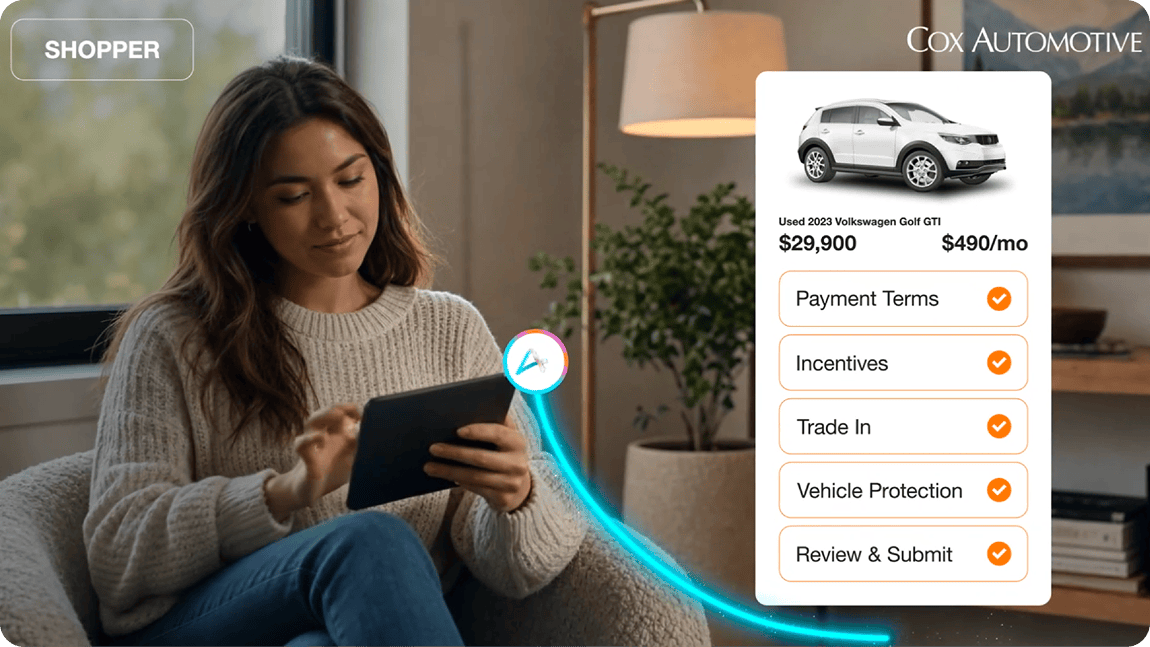
AI Powered Connectivity
Run a Faster, Smarter Dealership with AI-Powered Connectivity More Sales. More Profit. More Efficiency. Every interaction is an opportunity to move a deal forward or strengthen a relationship. Connected retail solutions keep those interactions aligne…
-
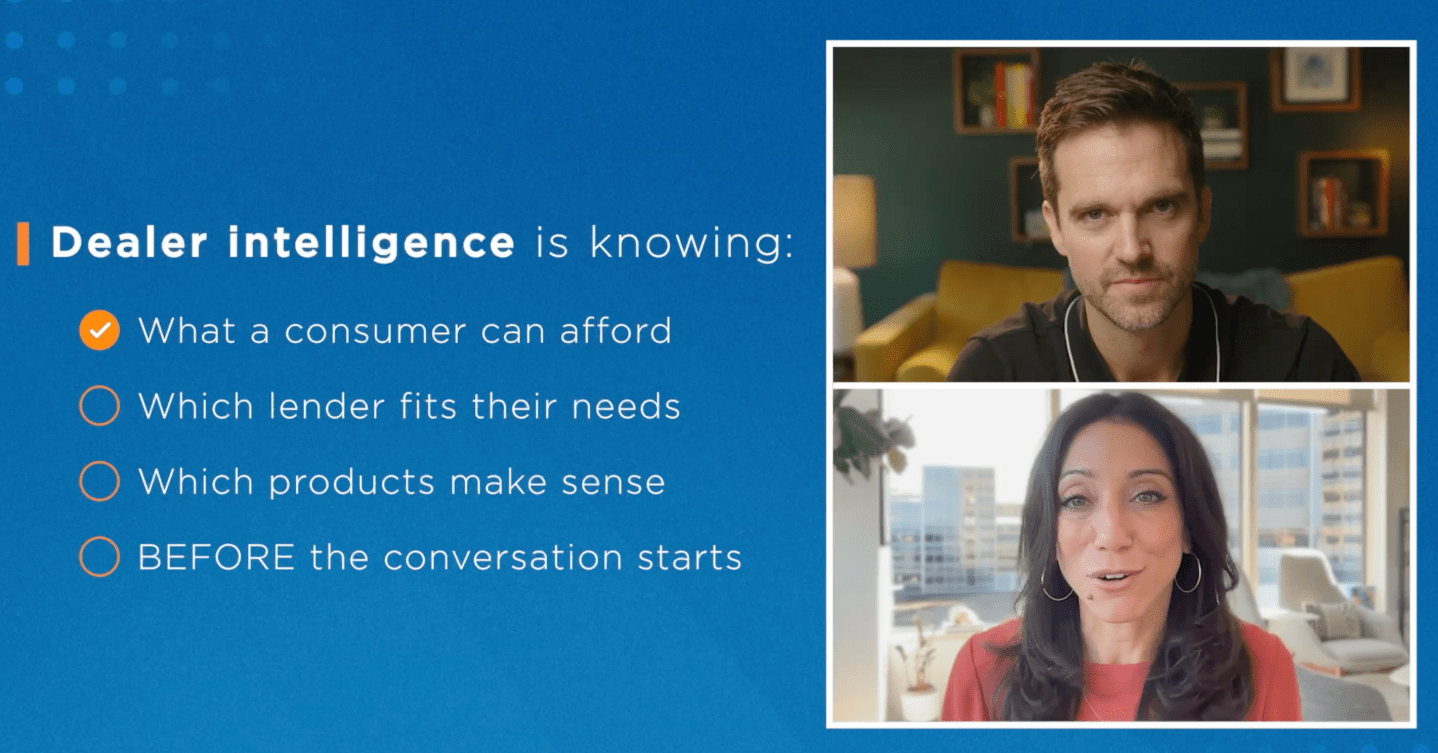
Driving Impact, Ep. 6: Building Stronger Customer Relationships
The best customer conversations start before a buyer walks into the dealership. Jessica Stafford discusses how deal intelligence gives sales and F&I teams more context about customer needs, budget and financing preferences. Learn how connected da…
-
Driving Impact, Ep. 5: Lessons from a 998-Vehicle Sales Month
How did one dealership grow from 35 vehicle sales a month to 998? In this episode of Driving Impact, Noah Lee shares practical lessons on AI, inventory management, transparent pricing and connected retailing. Learn how dealerships can use data, techn…

-
Driving Impact, Ep. 4: The New Rules of Trust in AI Search
Consumers are increasingly relying on AI search and other AI-powered experiences to research dealerships, compare options and form opinions before ever visiting a showroom. Matt Maher and Tessa Nadik discuss how AI is changing the way trust is earned…

-
Driving Impact, Ep. 3: Customers Have Changed. Is Your Car-Buying Experience Keeping Up?
In this episode of Driving Impact, Matt Maher sits down with Jessica Stafford to discuss what today’s car buyers value most and how dealers can evolve alongside changing expectations. From digital retailing and automotive financing to…
About This Research
Q1 2026 baseline wave and Q2 2026 trend wave. Dealer survey of franchise and independent dealerships (Q1 n=504; Q2 n=483), fielded March and May 2026; data weighted on dealership size. Consumer survey of next-12-month vehicle intenders (Q1 n=1,505; Q2 n=1,502), fielded Q1 and Q2 2026. Dealer findings are reported on the total base. Partner and champion comparisons pool both waves for a reliable base. Next wave: Q3 2026.
Media contact: Lisa Aloisio Lisa.Aloisio@coxautoinc.com 404.725.0651
FAQs
82% of dealers report using AI in some form, flat from Q1 2026 and consistent across franchise and independent dealerships. Dealers most often use a combination of standalone AI tools like ChatGPT, Gemini, and Grok and AI built into the dealership software they already use.
Source: Cox Automotive AI in Auto Retail Tracker, Q2 2026. Total dealers (franchise and independent).
Dealerships most often use AI to automate routine and complex tasks (40%), coordinate customer follow-up (40%), and generate content and creative materials (38%). These top uses held steady from Q1 2026, clustering near 40% each. Beyond the top three, dealers also use AI to personalize customer experiences and predict customer value.
Source: Cox Automotive AI in Auto Retail Tracker, Q2 2026.
Sales and marketing are the most AI-engaged departments, and sales extracts the most value across AI outcomes. Service and fixed operations saw the biggest quarter-over-quarter gain, rising from 33% to 39% AI use, driven largely by franchise dealerships (38% to 46%). F&I and back-office functions remain less AI-engaged, leaving clear room to expand.
Source: Cox Automotive AI in Auto Retail Tracker, Q2 2026.
Results are mixed and limited by a measurement gap. The most cited benefits are improved customer experience (28%) and employee productivity (26%). 69% of dealers expect AI to drive sales and revenue growth, but only 22% report seeing that growth so far. About one in three either aren’t measuring AI’s impact or have no clarity on how they’re measuring it.
Source: Cox Automotive AI in Auto Retail Tracker, Q2 2026.
Concern with accuracy and errors and ROI/cost are the top barriers to adopting AI, now cited at similar levels. For dealers already using AI, the biggest barriers to using it well are accuracy concerns, education and training needs, and integration challenges. Trust in underlying data sources and cost also factor in.
Source: Cox Automotive AI in Auto Retail Tracker, Q2 2026.
63% of in-market vehicle shoppers say they will definitely or probably use AI on their next vehicle purchase, roughly steady from Q1 2026 (61%). AI tools (36%) are now nearly level with automotive-specific websites (38%) as a research channel. 67% of shoppers trust AI at least “some,” flat from Q1.
Source: Cox Automotive AI in Auto Retail Tracker, Q2 2026. Among next-12-month vehicle intenders.
No. Consumers use AI to prepare for the dealership, not to avoid it. 24% say AI helps them feel more prepared when working with a dealership. Shoppers most often use AI to research vehicles and generate questions, and AI scores weakest on the tasks meant to replace direct dealer contact.
Source: Cox Automotive AI in Auto Retail Tracker, Q2 2026. Among next-12-month vehicle intenders.
Most dealerships still aren’t adjusting. Only 29% are actively adapting for AI-powered search, down from 32% in Q1 2026, while the share who know they need to act but haven’t started rose significantly from 26% to 32%. The gap between shopper AI adoption and dealer readiness is widening, not closing.
Source: Cox Automotive AI in Auto Retail Tracker, Q2 2026.
Dealers who work with an outside AI partner consistently outperform those who don’t. 13% have an external AI partner, and those who do are far more likely to report using AI optimally (66% vs. 46%), to be highly confident in AI outputs (30% vs. 8%), and to have seen sales and revenue growth from AI (36% vs. 21%). About one in three dealerships also have an internal AI champion.
Source: Cox Automotive AI in Auto Retail Tracker. Partner comparisons drawn from the combined Q1+Q2 2026 base.
The tracker is an ongoing quarterly study from Cox Automotive measuring AI adoption, impact, and consumer alignment in auto retail. Each wave surveys franchise and independent dealership decision-makers and in-market vehicle shoppers (those planning to buy within 12 months) across the United States. Q1 2026 was the baseline wave; Q2 2026 was the second. New waves publish quarterly.
Source: Cox Automotive AI in Auto Retail Tracker, Q1–Q2 2026.
The 2025 AI Readiness in Automotive Retail Study was a one-time thought leadership study. The Cox Automotive AI in Auto Retail Tracker is an ongoing quarterly study built to measure trends over time. Because study design and question wording differ, any 2025-to-2026 comparisons are directional only and not statistically significant.
Source: Cox Automotive AI in Auto Retail Tracker.